A year-by-year accounting of some of the significant events in Billy B. Van’s movie-making career.
Timeline
1915
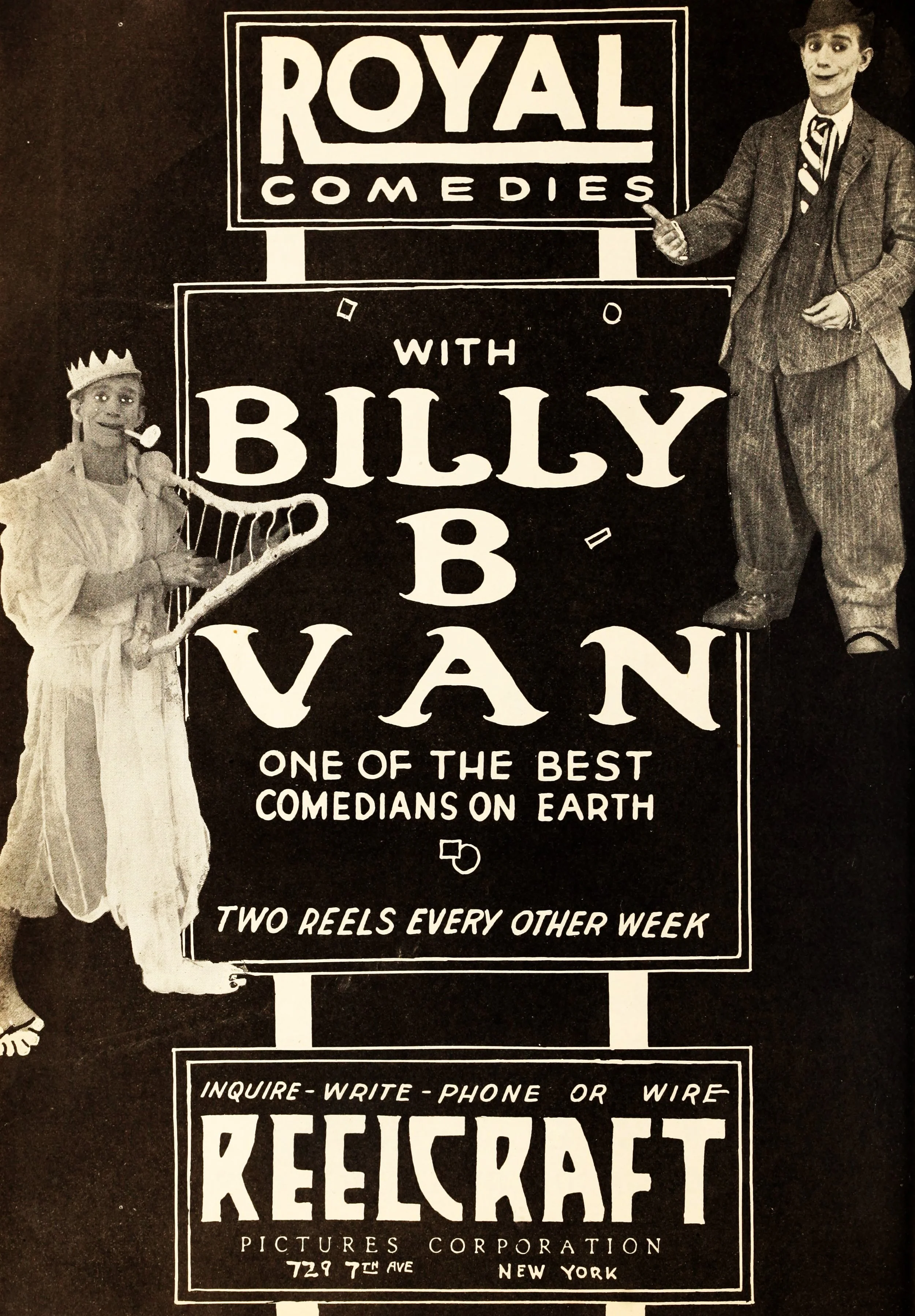
A pair of announcements in May 1915 outline an ambitious new venture: Broadway comedian Billy B. Van, in partnership with the Beaumont sisters, Nellie and Rose, plans to enter motion picture production through the newly formed Equity Motion Picture Company, Inc., with Van serving as president. The company proposes a steady output of weekly one- and two-reel comedies starring Van, alongside more ambitious four- and five-reel feature productions. Its studio, it is said, “will be located at Van Harbor, Sunapee Lake, New Hampshire.”
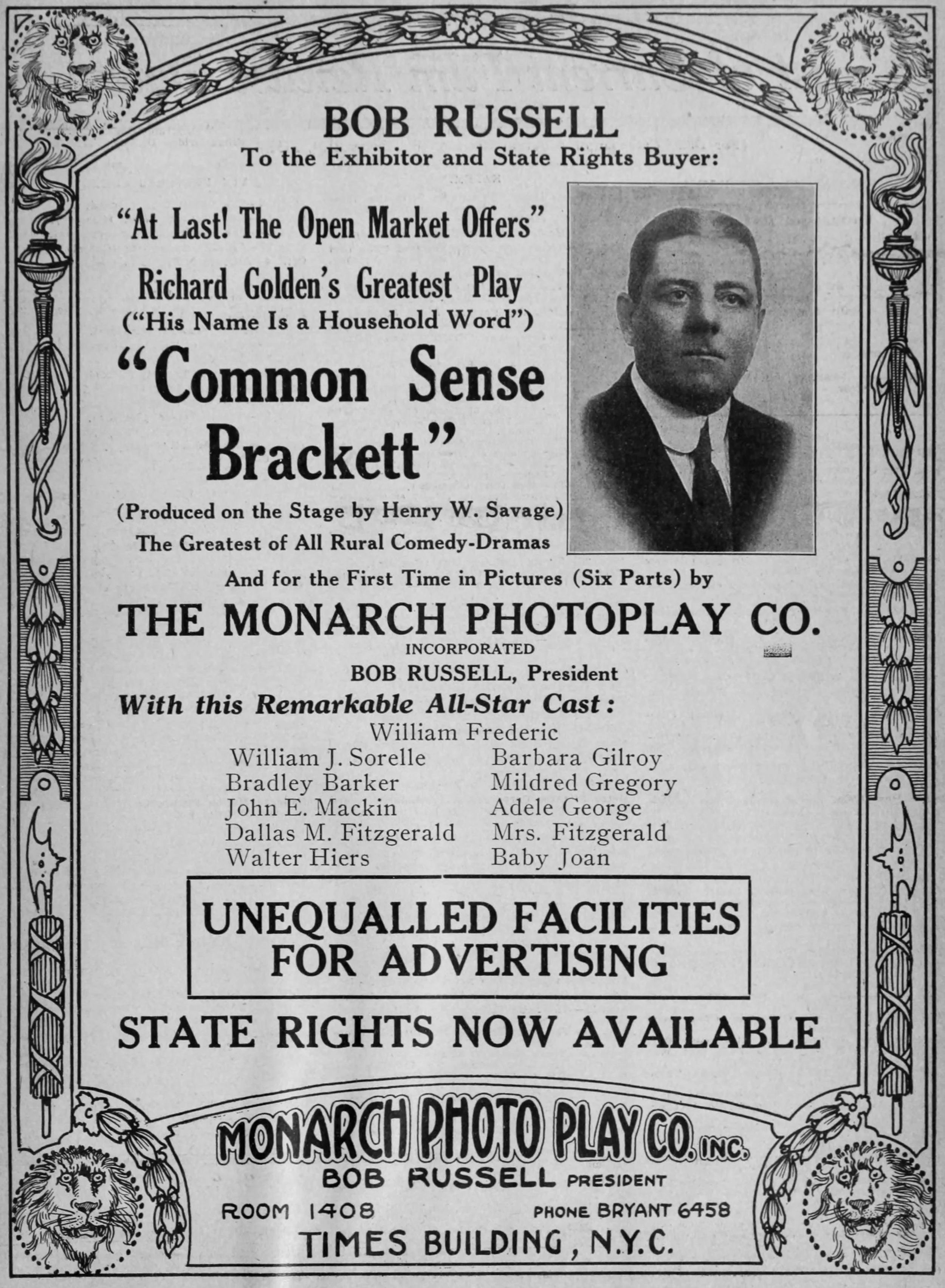
Equity is formally incorporated in New York City on May 29, 1915, with a capitalization of $5,000. Alongside Van, the officers include distributor Bob Russell as vice-president and secretary, and Charles M. Hudson as treasurer, with offices established in the Strand Theatre Building in Manhattan.
By mid-summer, plans appear to be moving quickly. A troupe of fifteen players is reportedly dispatched from New York to the newly christened Van Harbor studio, where production is to begin under director DeWitt C. Wheeler with the Beaumont sisters. Russell, meanwhile, is described in the trade press as a seasoned distributor who has “made a name for himself” placing major feature films with exhibitors nationwide.
Trade coverage of actual film production at Sunapee is fragmentary. A series of gossip columns mention at least two titles, “The Janitor’s Birthday” and “The Exploits of Emiline”—both said to feature a goat. While early trade-journal coverage is scant, Billy’s hometown paper, the New Hampshire Argus and Spectator, provides what may be our closest glimpse of this new “movie producing” business.
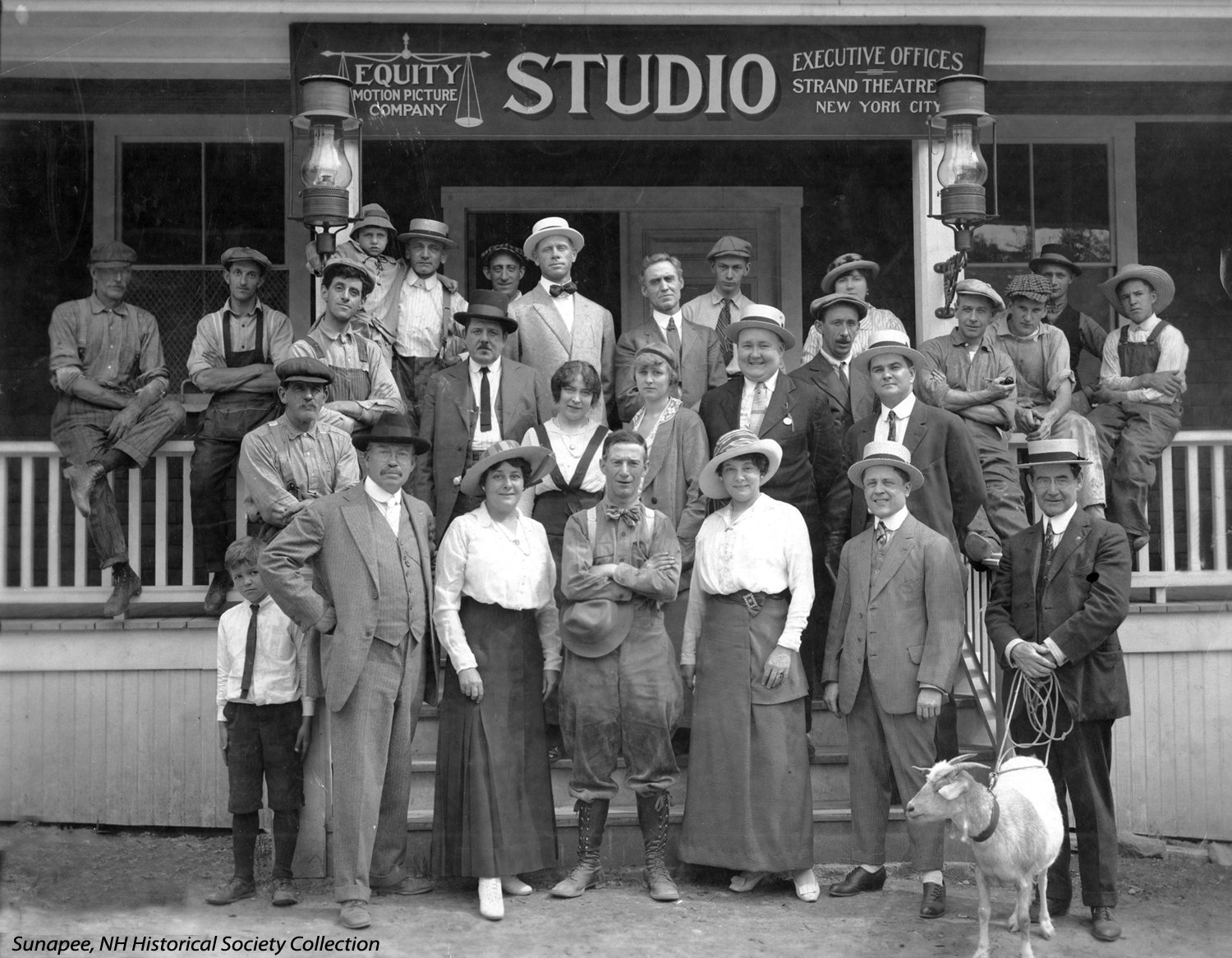
The Friday, July 9, 1915 Argus and Spectator reports that Billy, as president of the newly-formed Equity Motion Picture Corporation, is constructing a new motion picture studio, complete with dressing rooms, developing facilities, carpenter and artists’ shops, and property rooms, at his Van Harbor Casino on the shores of Lake Sunapee.
Later in the month, the paper reports on two films produced at Van’s new studio: “Some Hero,” and “The Janitor’s Birthday,” both of which resurface a decade later in a 1925 advertisement from Miller & Steen, suggesting at least some form of completion and circulation. A review of “Some Hero,” states, in part:
“The subject ”Some Hero,” is an original one and concerns the escapades of one Ezra Inbad, in search of heroic adventure. It is very cleverly worked out as a photo-comedy, presenting Mr. Van in the chief role, and the Beaumont sisters, Mrs. Van, and Miss Nellie Beaumont in equally important parts.”
Despite evidence of their production, and their existence at least a decade later, little else is known of these films and they are considered lost.
At the same time, Equity promotes a broader strategy: adapting proven vaudeville material for the screen, with Van and the Beaumont sisters as its principal stars. By autumn, the company signals further expansion, announcing plans to enter the processing and printing side of the business through the reported purchase of the J. W. Gunby Studio in Ridgefield Park, New Jersey, described as “one of the most up-to-date steel and concrete studios in that vicinity, in connection with a large developing and printing establishment, with every facility for the production of high-class one and two-reel comedies.”
Equity shoots 12,000 feet of film over the summer “to be used in raising a million dollars for the University of Michigan, and Dartmouth College,” and the company of players working at Van Harbor, Lake Sunapee. N. H., will soon begin rehearsals in the new studio at Ridgefield Park. N. J.
Financial ambitions also appear to grow rapidly. Late in the year, Equity announces a merger with Joseph Leblang’s Public Service Film Corporation, with Leblang—known as “the cut rate ticket king,” or “Broadway Joe”—joining as vice president. Initial capitalization is reported at $100,000, only to be revised shortly thereafter to $1,000,000, with production expected to begin in earnest at the start of 1916.
Yet by December, the picture becomes less clear. The Gunby Brothers issue a firm public denial that their Ridgefield Park studio and laboratories have been sold, asserting that any claims to the contrary are “handling the truth in a very careless manner.” Complicating matters further, a separate entity—Gunby Features—is said to be leasing space in the same building, raising questions about what, exactly, Equity has secured. By year’s end, the company’s plans remain expansive, but its footing uncertain.

“Part of the acting company and technical department of the Equity Motion Picture Company”
(Sunapee Historical Society - Collins Collection)
Among those in this photo taken on the deck of the Casino are said to be:
Nelle Beaumont (5), Walter Hiers (6), June Mathis (7), Rose Beaumont (9), Billy B. Van (11), Frank Holmes (12), Walter Holmes (13)

Actors in the Equity Motion Pictures company pose in front of the newly constructed studio in Georges Mills, NH (Sunapee Historical Society - Collins Collection)

Billy B. Van builds the Equity Pictures movie studio at the existing Van Harbor Casino. (Sunapee Historical Society - Collins Collection)
As an aid in the hunt for the lost films of Billy B. Van, this curated collection of contemporary trade press coverage serves as the foundation everything we know so far about one of New England’s earliest filmmakers. It is drawn from research on Lantern at the Media History Digital Library, a project of the Wisconsin Center for Film and Theater Research at the University of Wisconsin–Madison, which provides access to over three million pages of digitized trade journals, books, and magazines documenting the histories of early twentieth-century motion picture production, distribution, and industry activity as it occurred.