1915
A pair of announcements in May 1915 outline an ambitious new venture: Broadway comedian Billy B. Van, in partnership with the Beaumont sisters, Nellie and Rose, plans to enter motion picture production through the newly formed Equity Motion Picture Company, Inc., with Van serving as president. The company proposes a steady output of weekly one- and two-reel comedies starring Van, alongside more ambitious four- and five-reel feature productions. Its studio, it is said, “will be located at Van Harbor, Sunapee Lake, New Hampshire.”
Equity is formally incorporated in New York City on May 29, 1915, with a capitalization of $5,000. Alongside Van, the officers include distributor Bob Russell as vice-president and secretary, and Charles M. Hudson as treasurer, with offices established in the Strand Theatre Building in Manhattan.
By mid-summer, plans appear to be moving quickly. A troupe of fifteen players is reportedly dispatched from New York to the newly christened Van Harbor studio, where production is to begin under director DeWitt C. Wheeler with the Beaumont sisters. Russell, meanwhile, is described in the trade press as a seasoned distributor who has “made a name for himself” placing major feature films with exhibitors nationwide.
Trade coverage of actual film production at Sunapee is fragmentary. A series of gossip columns mention at least two titles, “The Janitor’s Birthday” and “The Exploits of Emiline”—both, interestingly, said to feature a goat. While early trade-journal coverage is scant, Billy’s hometown paper, the New Hampshire Argus and Spectator, provides what may be the closest glimpse of this new “movie producing” business.
The Friday, July 9, 1915 Argus and Spectator reports that Billy, as president of the newly-formed Equity Motion Picture Corporation, is constructing a new motion picture studio, complete with dressing rooms, developing facilities, carpenter and artists’ shops, and property rooms, at his Van Harbor Casino on the shores of Lake Sunapee.
Later in the month, the paper reports on two films produced at Van’s new studio: “Some Hero,” and “The Janitor’s Birthday,” both of which resurface a decade later in a 1925 advertisement from Miller & Steen, suggesting at least some form of completion and circulation. A review of “Some Hero,” states, in part:
“The subject ”Some Hero,” is an original one and concerns the escapades of one Ezra Inbad, in search of heroic adventure. It is very cleverly worked out as a photo-comedy, presenting Mr. Van in the chief role, and the Beaumont sisters, Mrs. Van, and Miss Nellie Beaumont in equally important parts.”
Despite evidence of their production, and their existence at least a decade later, little else is known of these films and they are considered lost.
At the same time, Equity promotes a broader strategy: adapting proven vaudeville material for the screen, with Van and the Beaumont sisters as its principal stars. By autumn, the company signals further expansion, announcing plans to enter the processing and printing side of the business through the reported purchase of the J. W. Gunby Studio in Ridgefield Park, New Jersey, described as “one of the most up-to-date steel and concrete studios in that vicinity, in connection with a large developing and printing establishment, with every facility for the production of high-class one and two-reel comedies.”
Equity shoots 12,000 feet of film over the summer “to be used in raising a million dollars for the University of Michigan, and Dartmouth College,” and the company of players working at Van Harbor, Lake Sunapee. N. H., will soon begin rehearsals in the new studio at Ridgefield Park. N. J.
Financial ambitions also appear to grow rapidly. Late in the year, Equity announces a merger with Joseph Leblang’s Public Service Film Corporation, with Leblang—known as “the cut rate ticket king,” or “Broadway Joe”—joining as vice president. Initial capitalization is reported at $100,000, only to be revised shortly thereafter to $1,000,000, with production expected to begin in earnest at the start of 1916.
Yet by December, the picture becomes less clear. The Gunby Brothers issue a firm public denial that their Ridgefield Park studio and laboratories have been sold, asserting that any claims to the contrary are “handling the truth in a very careless manner.” Complicating matters further, a separate entity—Gunby Features—is said to be leasing space in the same building, raising questions about what, exactly, Equity has secured. By year’s end, the company’s plans remain expansive, but its footing uncertain.
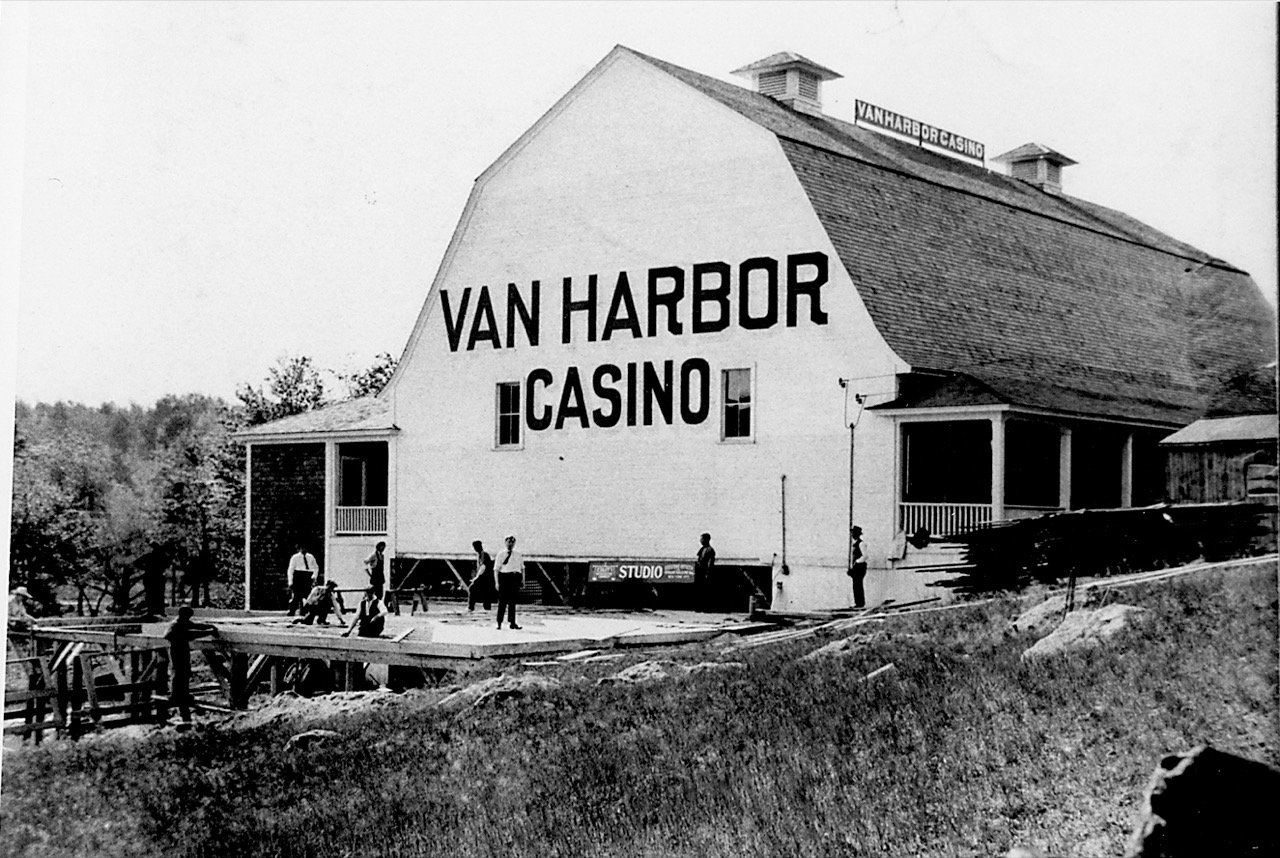
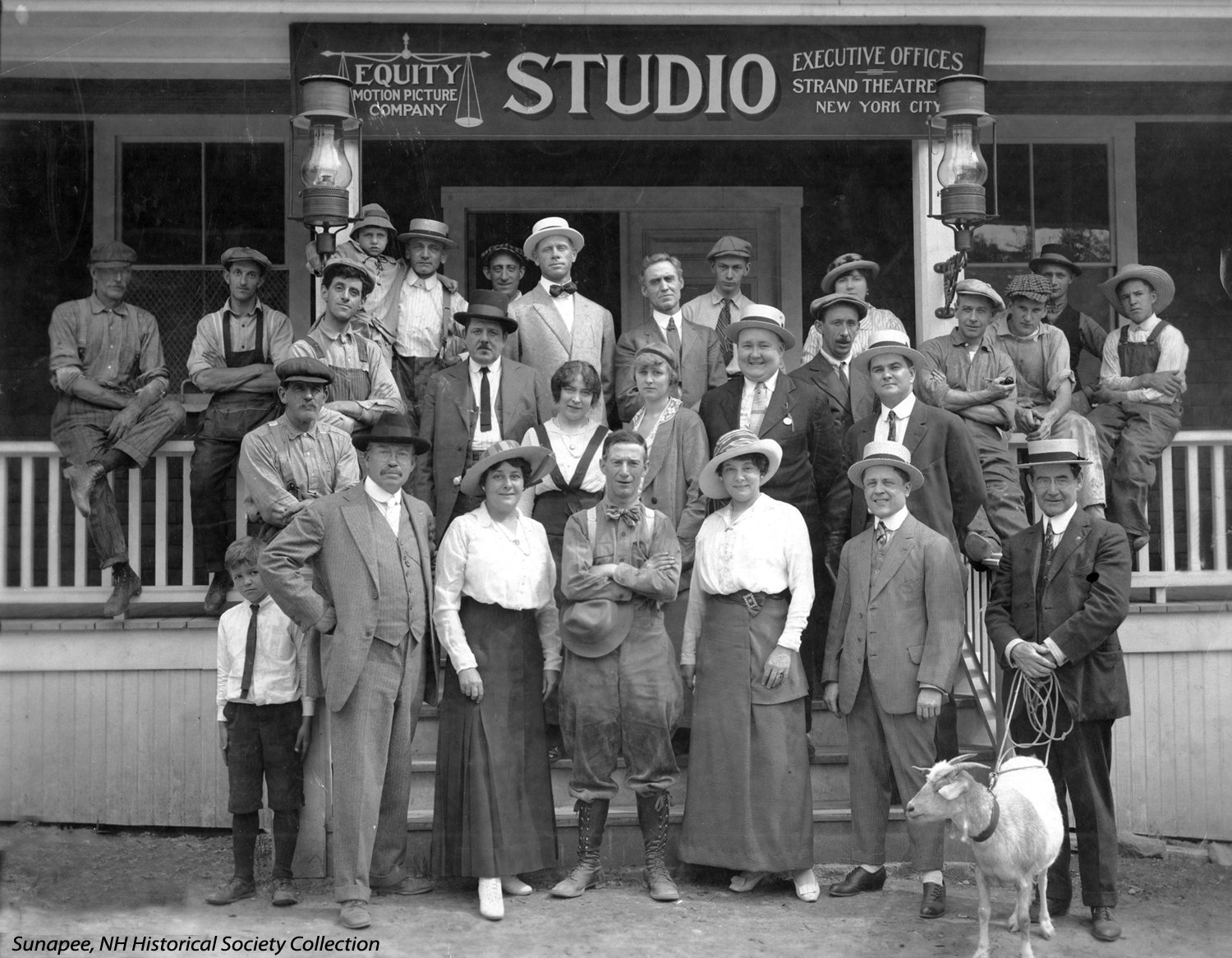
Billy B. Van builds the Equity Pictures movie studio at the existing Van Harbor Casino. (Sunapee Historical Society - Collins Collection)
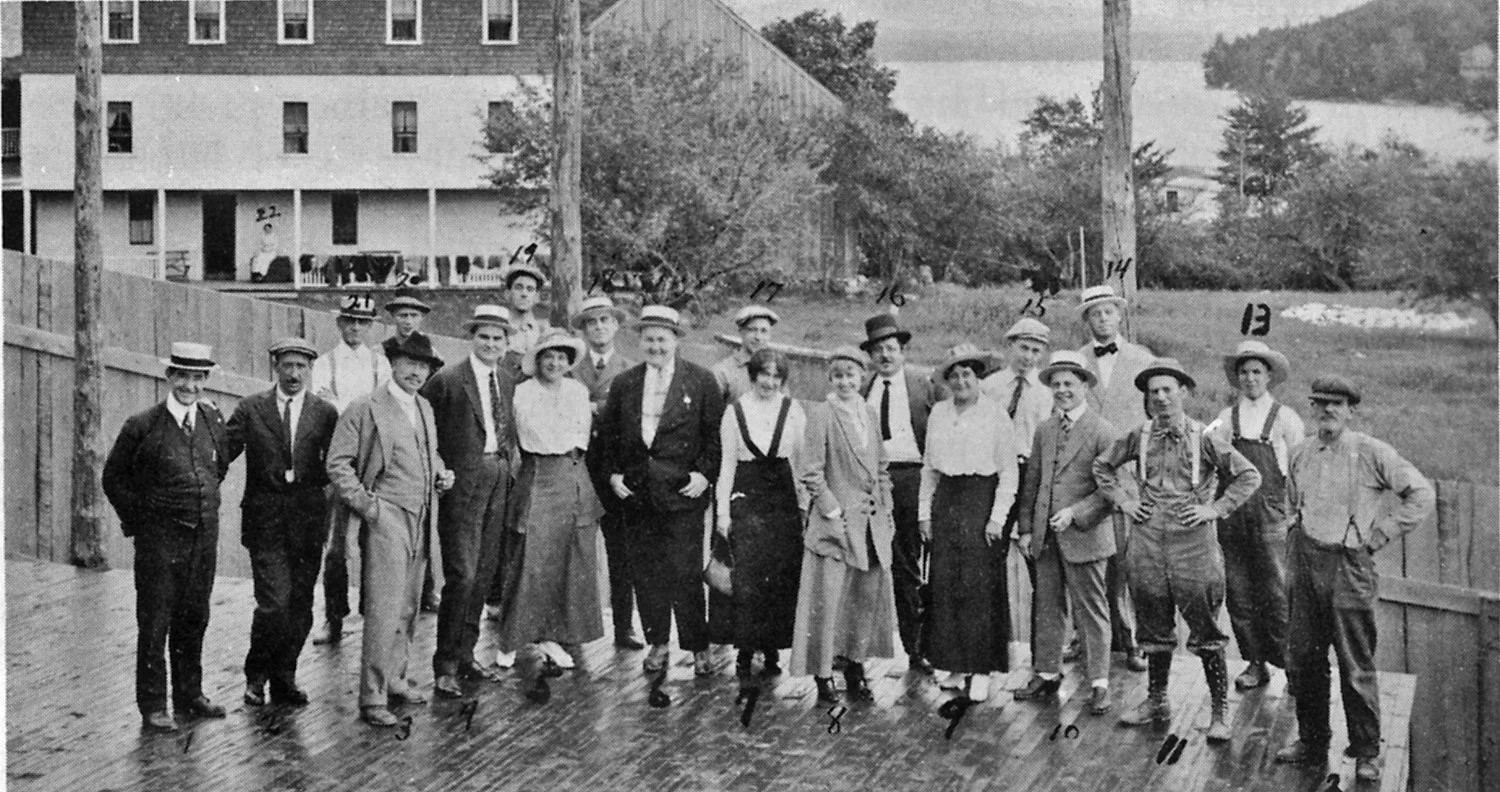
“Part of the acting company and technical department of the Equity Motion Picture Company.” Among those in this photo taken on the deck of the Casino are said to be:
Nelle Beaumont (5), Walter Hiers (6), June Mathis (7), Rose Beaumont (9), Billy B. Van (11), Frank Holmes (12), Walter Holmes (13)
(Sunapee Historical Society - Collins Collection)
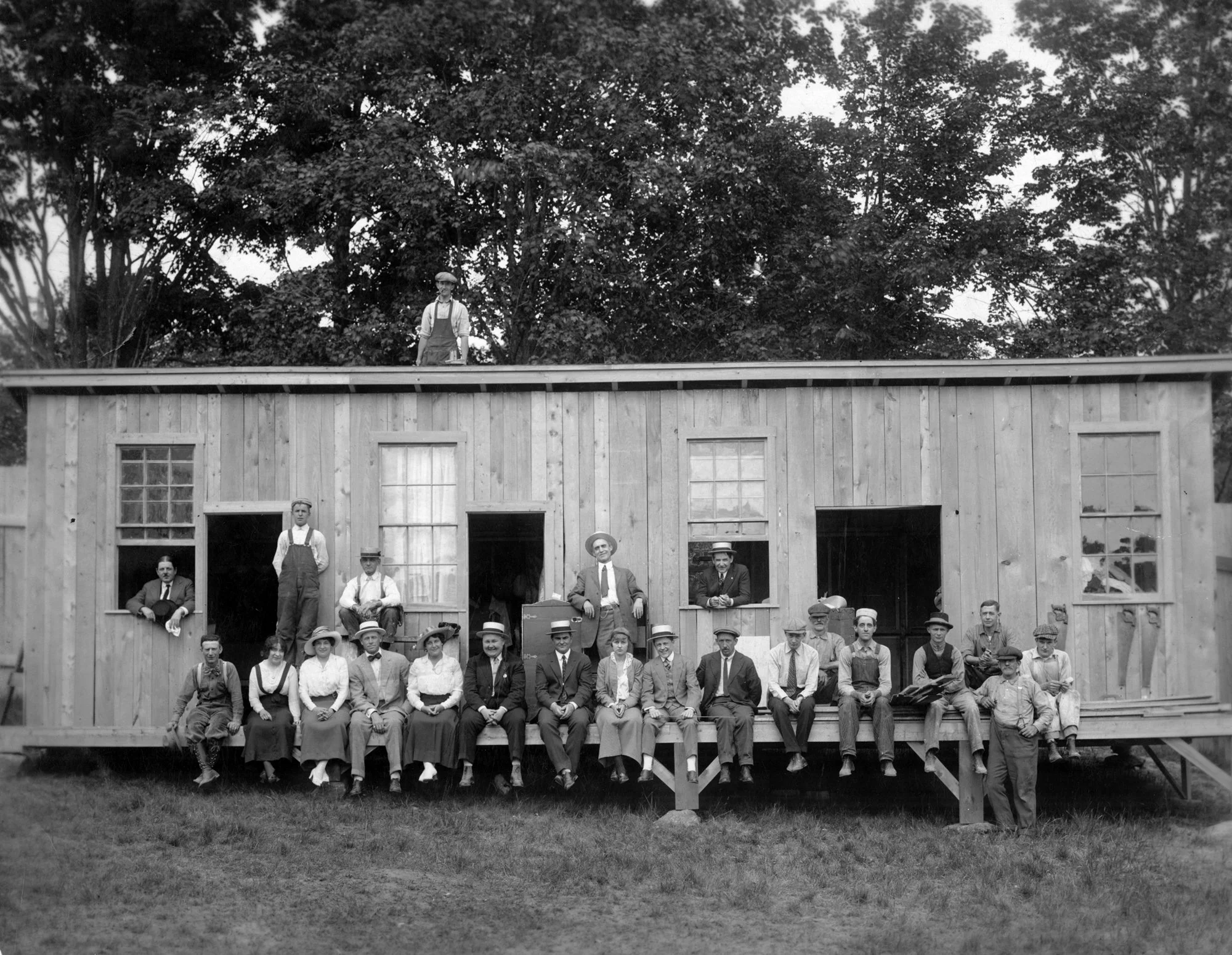
Actors in the Equity Motion Pictures company pose in front of the newly constructed studio in Georges Mills, NH (Sunapee Historical Society - Collins Collection)
1916 begins much as 1915 ended—with continued confusion surrounding Equity’s reported acquisition of the Gunby laboratories in Ridgefield Park, New Jersey. The Gunby Brothers again publicly deny any sale, this time attributing the misunderstanding to Charter Features, a company leasing space in the building but “having no connection with the Gunby laboratories situated in the same building.”
1916
Despite these denials, Equity’s ambitions appear undiminished. Early in the year, the company renews its announcement of a merger with Joseph Leblang’s Public Service Film Corporation, now capitalized at a reported $1,000,000. Billy B. Van remains president, with Leblang as vice president, and offices again listed in the Strand Theatre Building in New York. The company claims access to extensive facilities: acreage around Lake Sunapee, an indoor studio, and the still-disputed Gunby plant in New Jersey, where production is said to be imminent.
Amid these expansive claims, the role of distributor Bob Russell begins to shift. Originally named as a principal in Equity’s 1915 incorporation, Russell does not appear among the officers in the proposed merger. Instead, he surfaces independently in connection with continued film production at Lake Sunapee, suggesting that activity in the region is proceeding along lines not entirely controlled by Equity or Van.
By late 1916, Russell is associated with the Monarch Photoplays feature “Common Sense Brackett,” shot on location at Lake Sunapee. Trade descriptions emphasize its realism, noting that the six-reel production was filmed “in the real country among the sort of people Common Sense Brackett knew,” on the shores near George’s Mills, New Hampshire. The cast includes a range of established screen performers drawn from companies such as Famous Players, Thanhouser, and Lubin.
“Common Sense Brackett” receives a favorable review and is scheduled for release in October 1916, providing one of the clearest indications of sustained film production activity in the Sunapee region during this period—even as Equity’s own operations remain difficult to trace in detail. While not starring Billy B. Van, this film would be an incredibly rare and meaningful piece of Sunapee history if found.
In March, Billy B. Van extends his work into the growing phonograph market with the release of a Victor Talking Machine Company record (Victor 17960), featuring performances of his vaudeville routines “To My Dog “ and “Mickey the Pum Pum Man.” The recording provides a rare surviving example of Van’s stage material as it was presented to contemporary audiences.
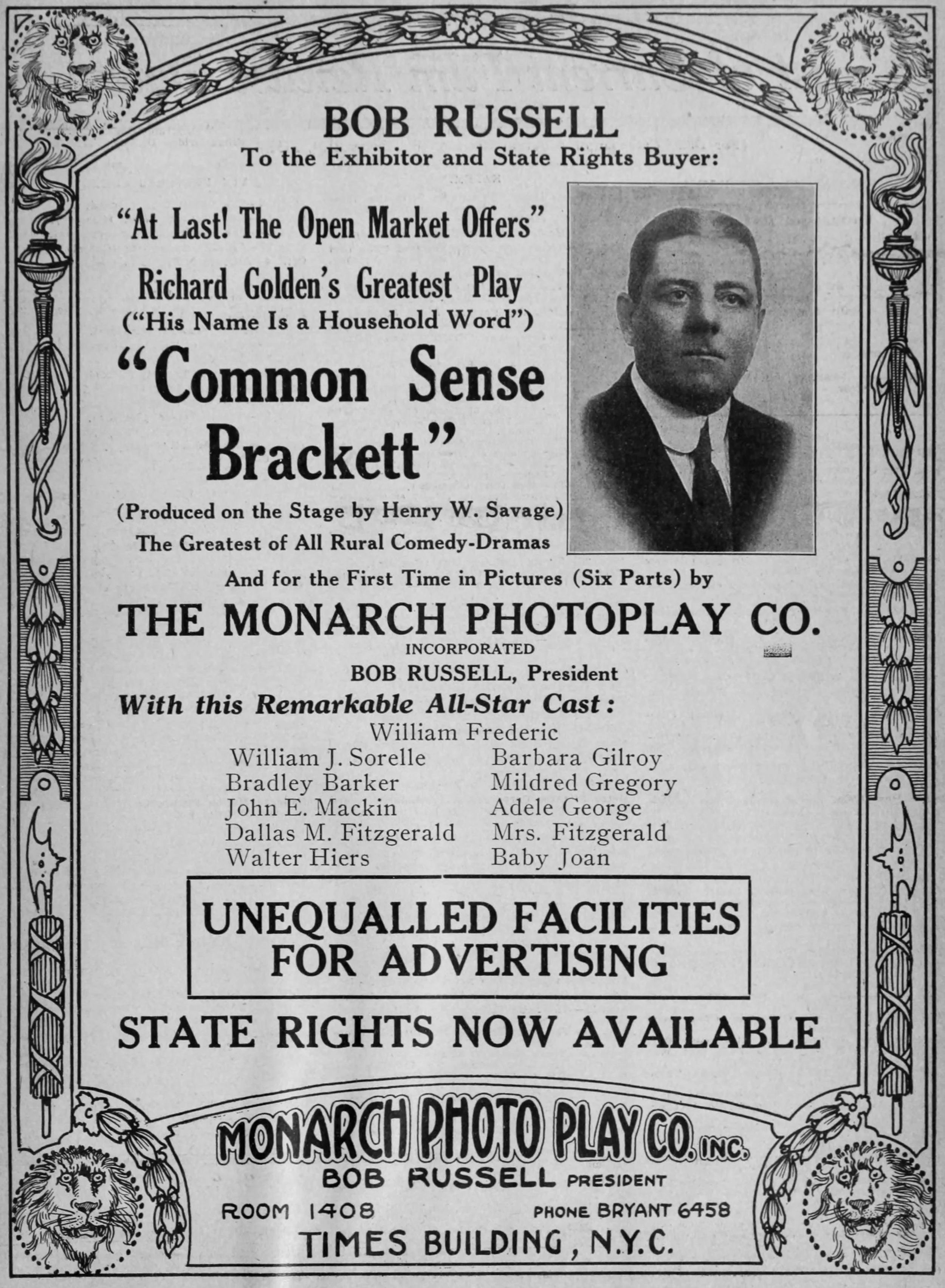
Advertisement for “Common Sense Brackett.”
1918
A two-sentence announcement in November states that Billy B. Van may produce films under the Famous-Players Lasky banner. The mention is nonetheless notable, placing Van—at least momentarily—in connection with one of the most prominent production organizations of the period.
Famous Players–Lasky Corporation was one of the biggest players of the silent film era, operating from 1916 to 1933 Among its biggest films were “The Sheik” (1921), “The Ten Commandments” (1923) and “Wings” (1927). Stars in the company included such luminaries as Mary Pickford, Rudolph Valentino, Clara Bow, and Ruth Chatterton, who had been a 1915 guest of Billy’s in Sunapee.
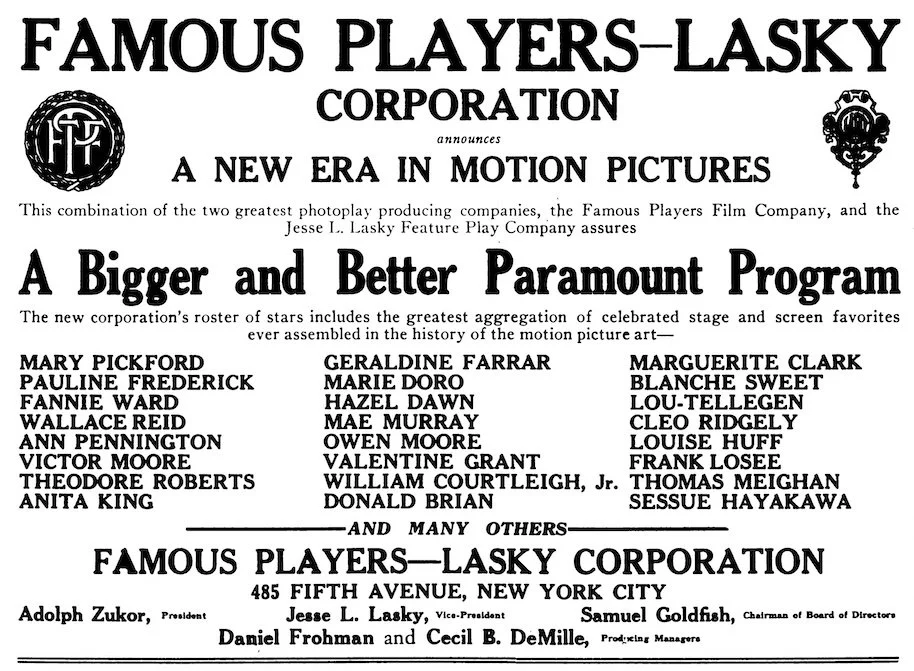
Advertisement announcing the partnership of Famous Players and the Lasky Corporation.
1919
By early 1919, Billy B. Van appears to make a decisive shift in his film activities. In what may represent either a break from the earlier Equity Motion Picture venture or a restructuring of its assets, the Sunapee Film Corporation is formed, with Bob Russell in a leading role. Van subsequently sells his Georges Mills studio to the new company, reportedly realizing a profit of $10,000, and is engaged to star in its initial productions.
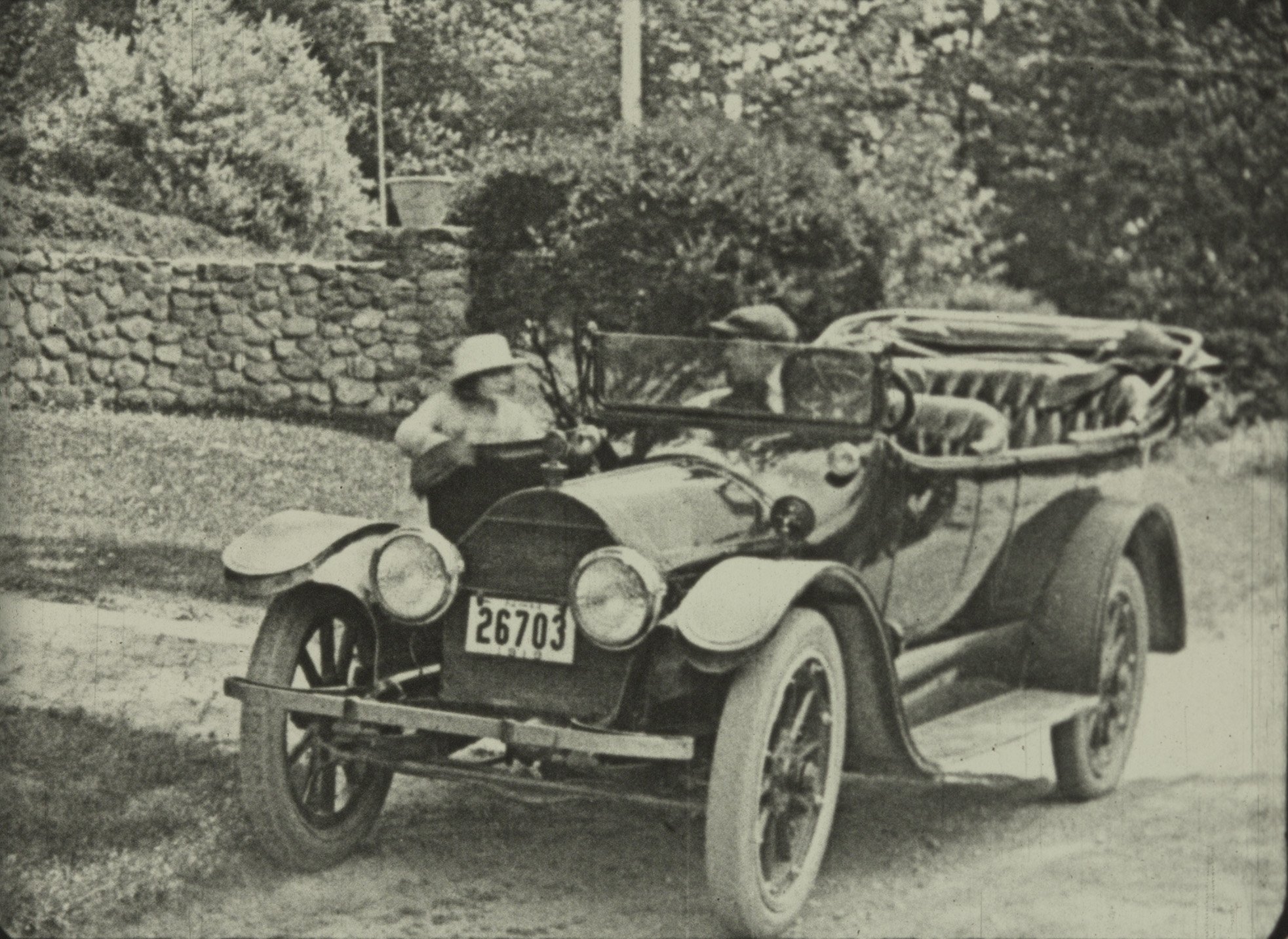
For the first time since the flurry of announcements in 1915–1916, there is clearer evidence of sustained film production involving Van himself. Work on the comedy “Van-ar-chy” was likely underway during this period, supported in part by internal evidence within the surviving film, including the appearance of a contemporary automobile license plate.
Production of “Where Are Your Husbands?” also appears to date to this time. A surviving fragment of original negative carries Kodak edge code markings that identify the film stock’s year of manufacture, providing additional confirmation of activity in 1919.
Together, these films offer the strongest indication to date that Van’s long-gestating motion picture ambitions had, by this point, translated into completed screen work.
Left: "Where Are Your Husbands?" This scrap of film negative eventually led to a miraculous find at the Library of Congress (story here). From the personal effects of Billy B. Van. This two foot long outtake from a professional film production shows an actress holding a camera slate noting that the previously scene was "no good." The next scene shows men in hats shot through a window. Actors unknown. 35mm Kodak negative nitrate motion picture film manufactured in 1919.
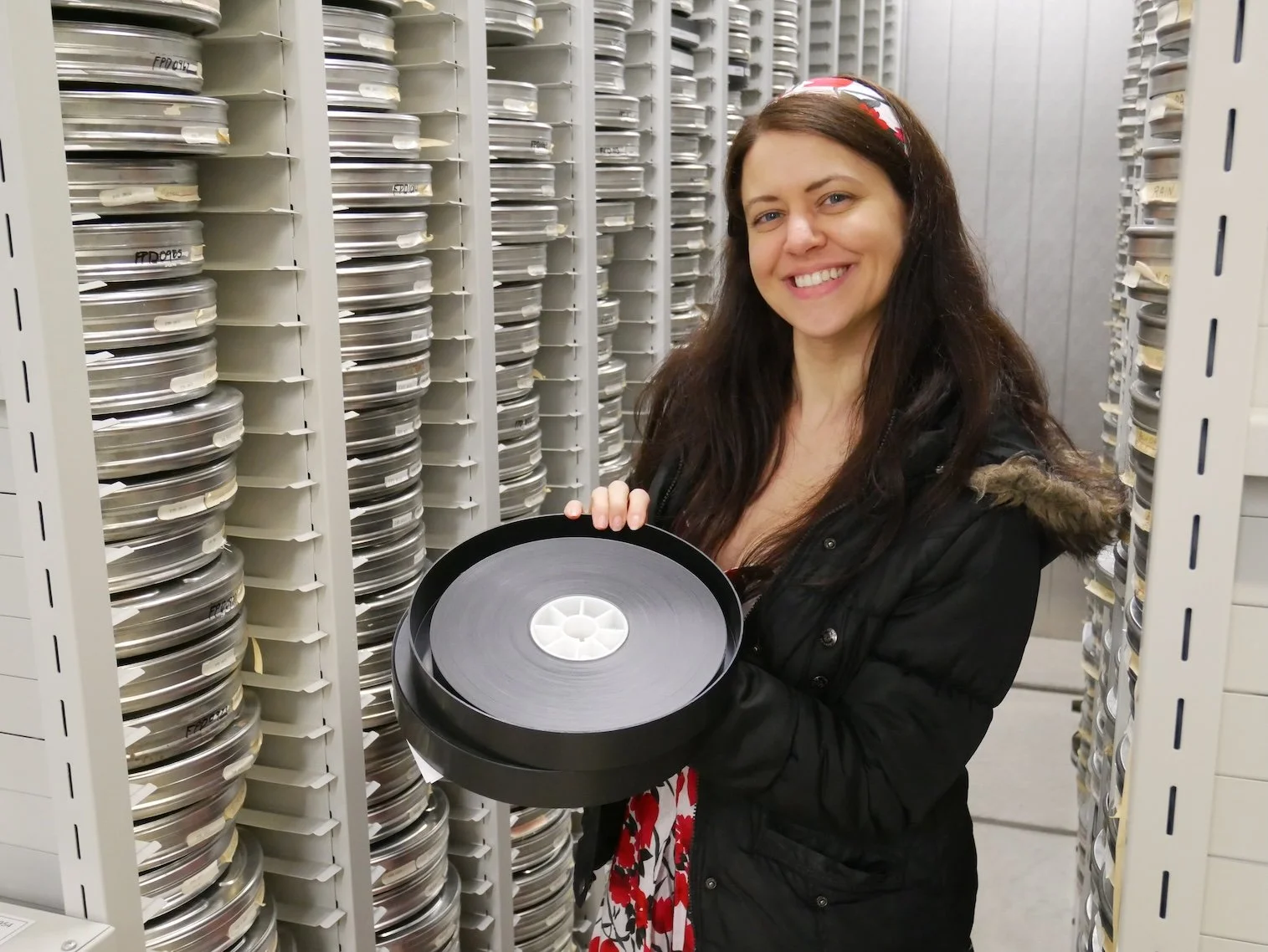
Suited up in a winter coat to enter the refrigerated nitrate film storage vault.
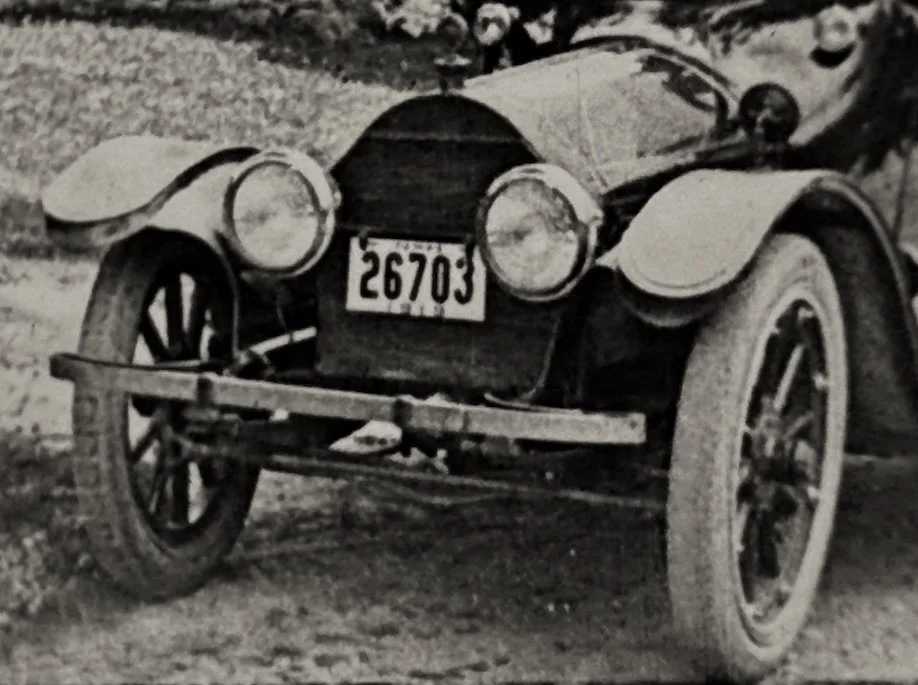
Above: Still-frame from “Van-ar-chy” shows a barely visible “1919” on a license plate.
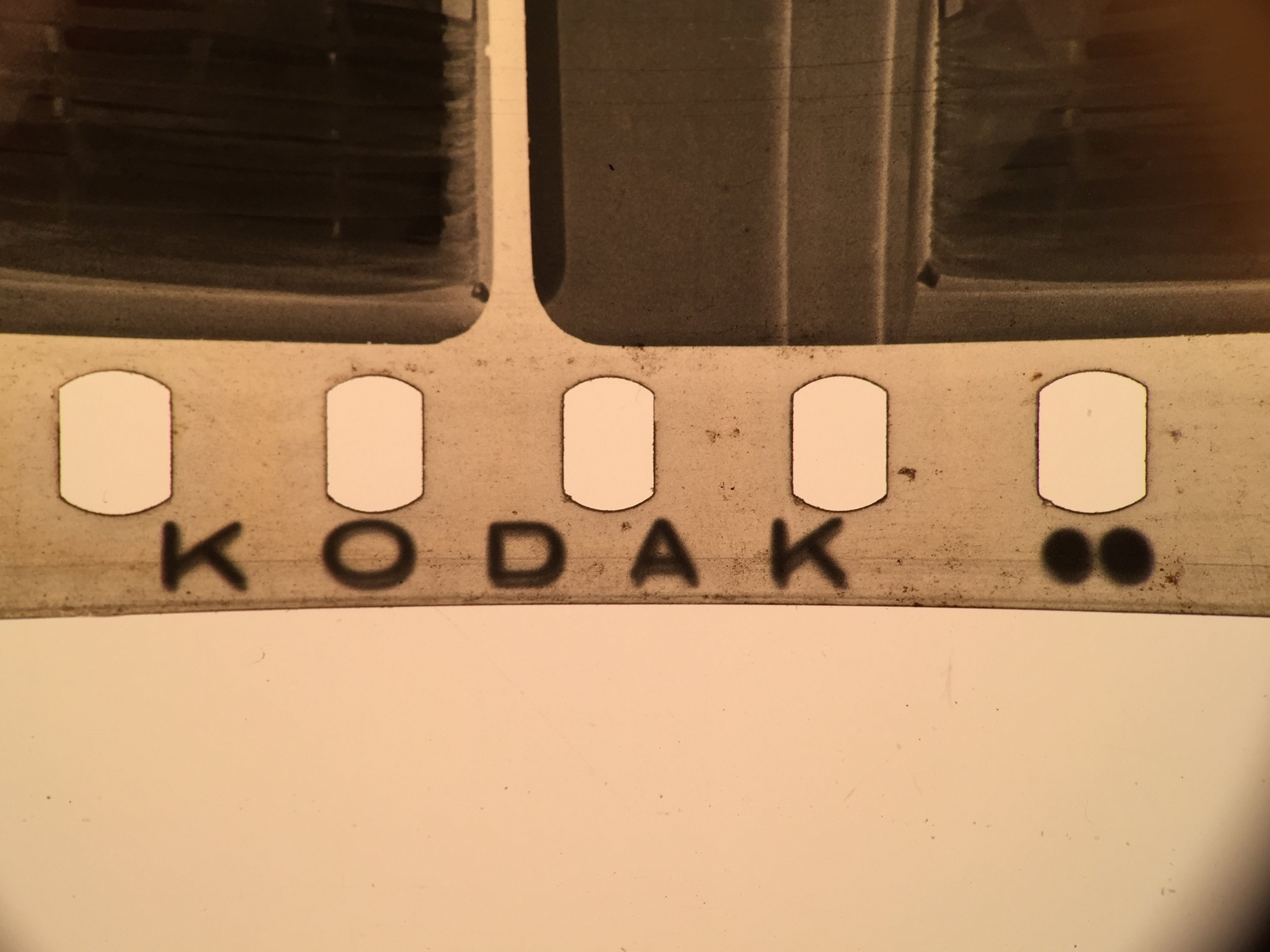
Kodak “edge code” showing a 1919 date for the found negative of “Where Are Your Husbands?”
The U.S. Library of Congress Packard Campus for Audio Visual Conservation in Culpeper, Virginia, home to over 1.9 million film and moving image items- including Billy B. Van’s “Where Are Your Husbands?” which was discovered there by chance in 2017.
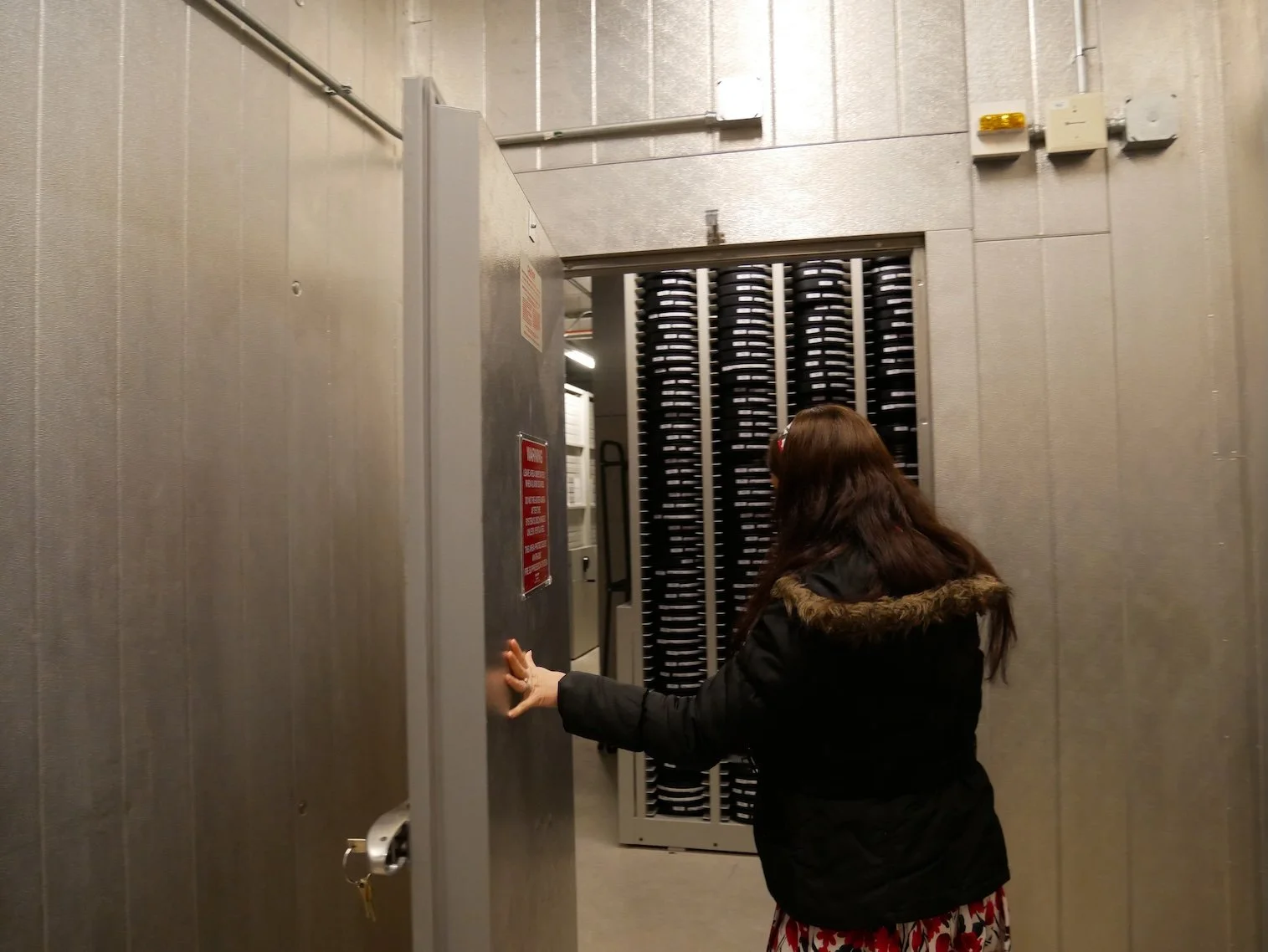
Rachel Del Gaudio, Moving Image Processing Technician at the Library of Congress, with the “formerly lost” print of Billy B. Van’s “Where Are Your Husbands?”
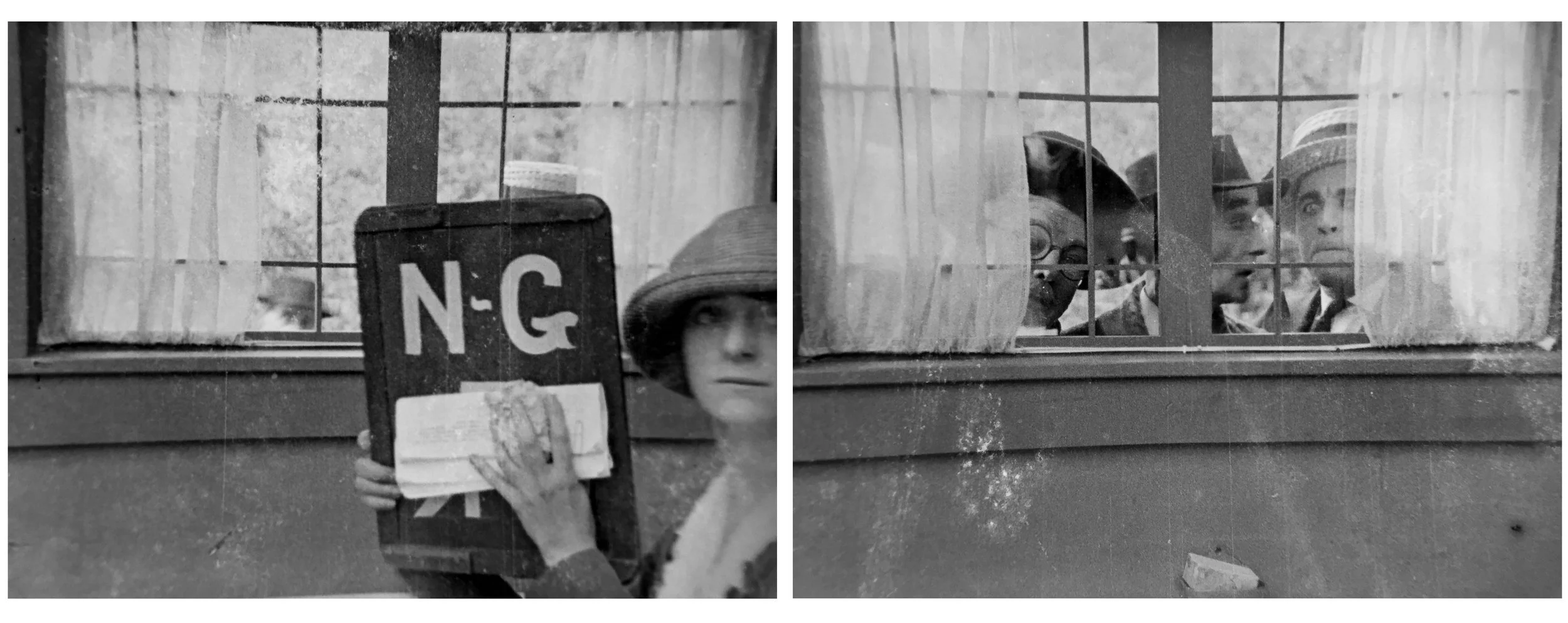
Frames from the strip of film negative shown in positive
1920
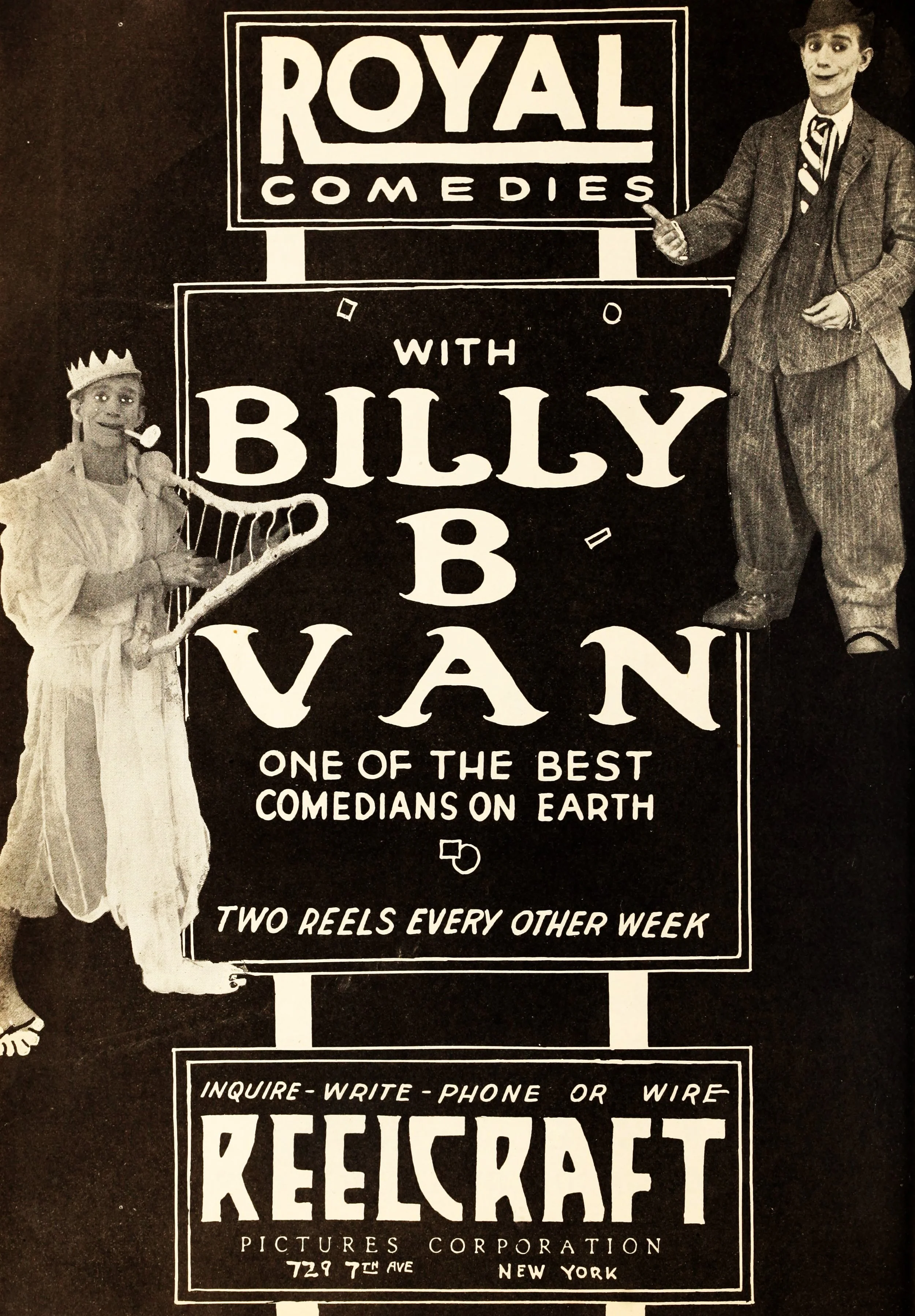
Reelcraft advertisement running in the trade press
No mention of the films of Billy B. Van can be complete without mention of Reelcraft Pictures Corporation, with main offices at 729 7th Ave in New York City. Reelcraft distributed at least 4 of Billy B. Van’s films in its “Royal Comedy” series: “More Bull,” “Snakes,” “The Plucky Hoodoo,” and “Where Are Your Husbands?”
Incorporated in February of 1920 for $5,000,000 ($62+ million dollars today), it would eventually face several lawsuits and go into bankruptcy only two years later- though various Reelcraft film exchanges would continue to survive for some time.
Formed through the merger of several regional production and distribution companies, Reelcraft quickly assembles a nationwide network of exchanges and a roster of established comedic performers. Within this framework, Van is signed to produce and star in a series of two-reel comedies as part of the company’s “Royal Comedy” line.
Picture exchanges were the local offices through which Reelcraft distributed its movies. According to its advertising, Reelcraft operated picture exchanges under its own name in Chicago, Indianapolis, Minneapolis, Milwaukee, and New York City, and with other companies across the U.S. The exchange locations remain an active target of investigation for the films of Billy B. Van.
Reelcraft later announces partnership with the Export and Import Film Company of New York for foreign distribution of Reelcraft films. Export and Import Film Company would later go on to buy the assets of Reelcraft when it goes bankrupt in 1922.
By mid-year, Van is announced as actively engaged in production, even as he continues to appear in vaudeville alongside James J. Corbett. Reelcraft announces the first 2-reel Billy B. Van comedy will be titled “More Bull” and to be part of its Royal Comedy Series. Later in the year, the first title is announced instead to be “Snakes,” along with an announcement that Billy has completed his second Royal Comedy, the mis-named “Lucky Hoodoo.”
“Snakes” opens in August 1920 and receives a modestly positive reception in the trade press, described as “acceptable,” with “several humorous bits” and generally solid production values. Additional titles follow in quick succession, including “The Plucky Hoodoo” and “Where Are Your Husbands?, the latter noted for its satirical premise involving domestic role reversals and concluding dream twist.
Reelcraft responds to the apparent success of these releases by expanding its Royal Comedy program, promoting Van as “one of the best comedians on earth” and commissioning additional entries in the series. At the same time, the company pursues aggressive growth, raising additional capital through public stock offerings and extending its distribution reach both domestically and abroad.
Chartered at 5 million dollars in February, Reelcraft follows up with an $800,000 offering of preferred stock to the public in August, according to quarterly reporting and a public announcement.
Yet even at this early stage, signs of overextension are visible. Reelcraft’s rapid expansion, ambitious capitalization, and reliance on a broad network of exchanges foreshadow the financial difficulties that would overtake the company within a few years.
For Van, however, 1920 represents a clear breakthrough: after several years of uncertain ventures and limited documentation, his work now appears regularly on screens, supported by an organized production and distribution system and confirmed by both release records and contemporary reviews.
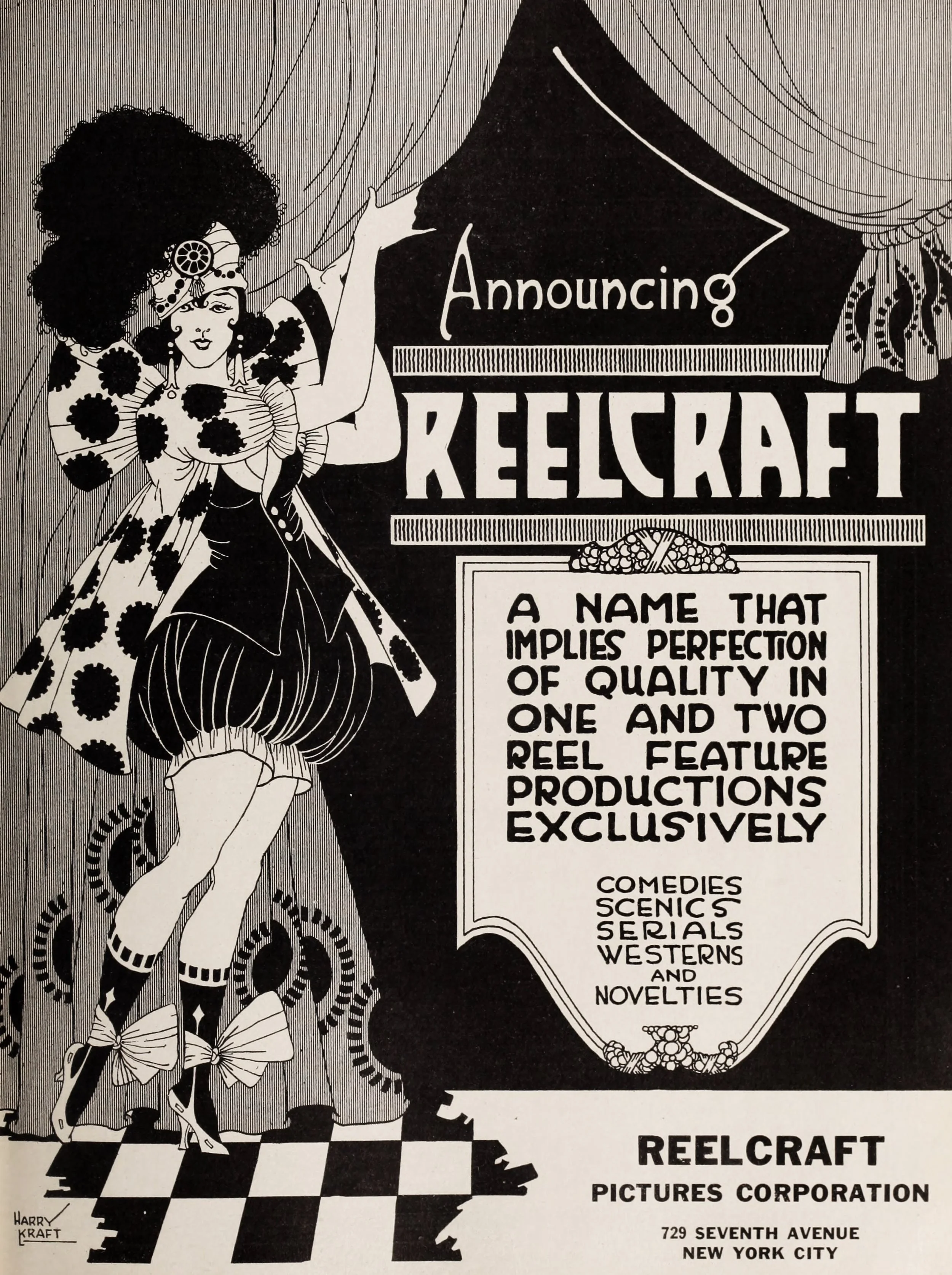
Advertisement for the newly-formed Reelcraft Pictures, who gave Billy B. Van’s films national distribution.
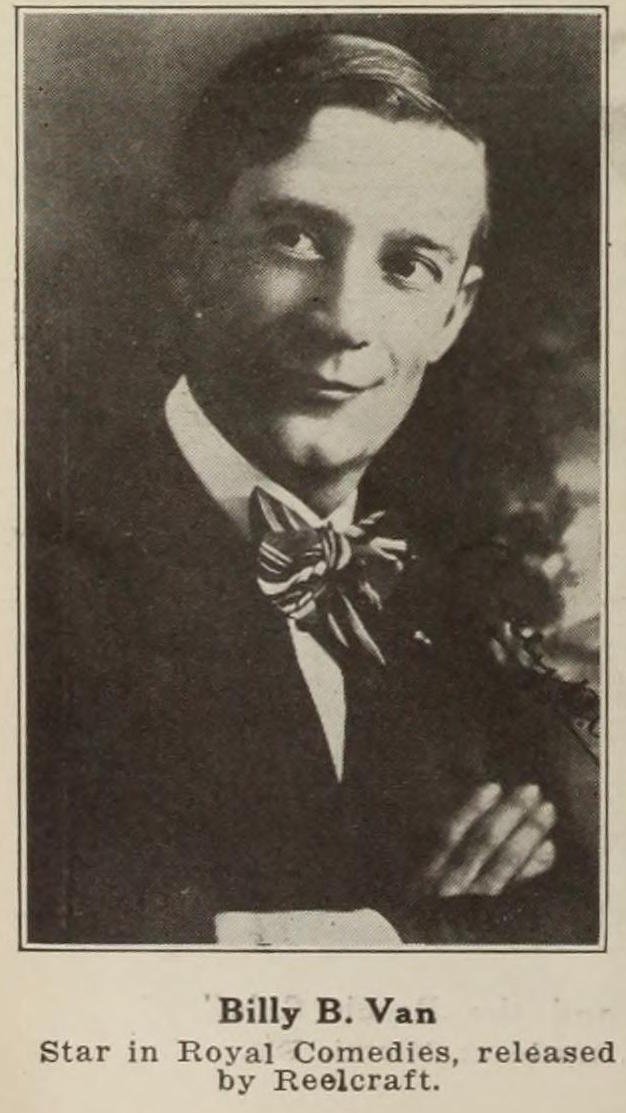
Publicity photo of Billy B. Van
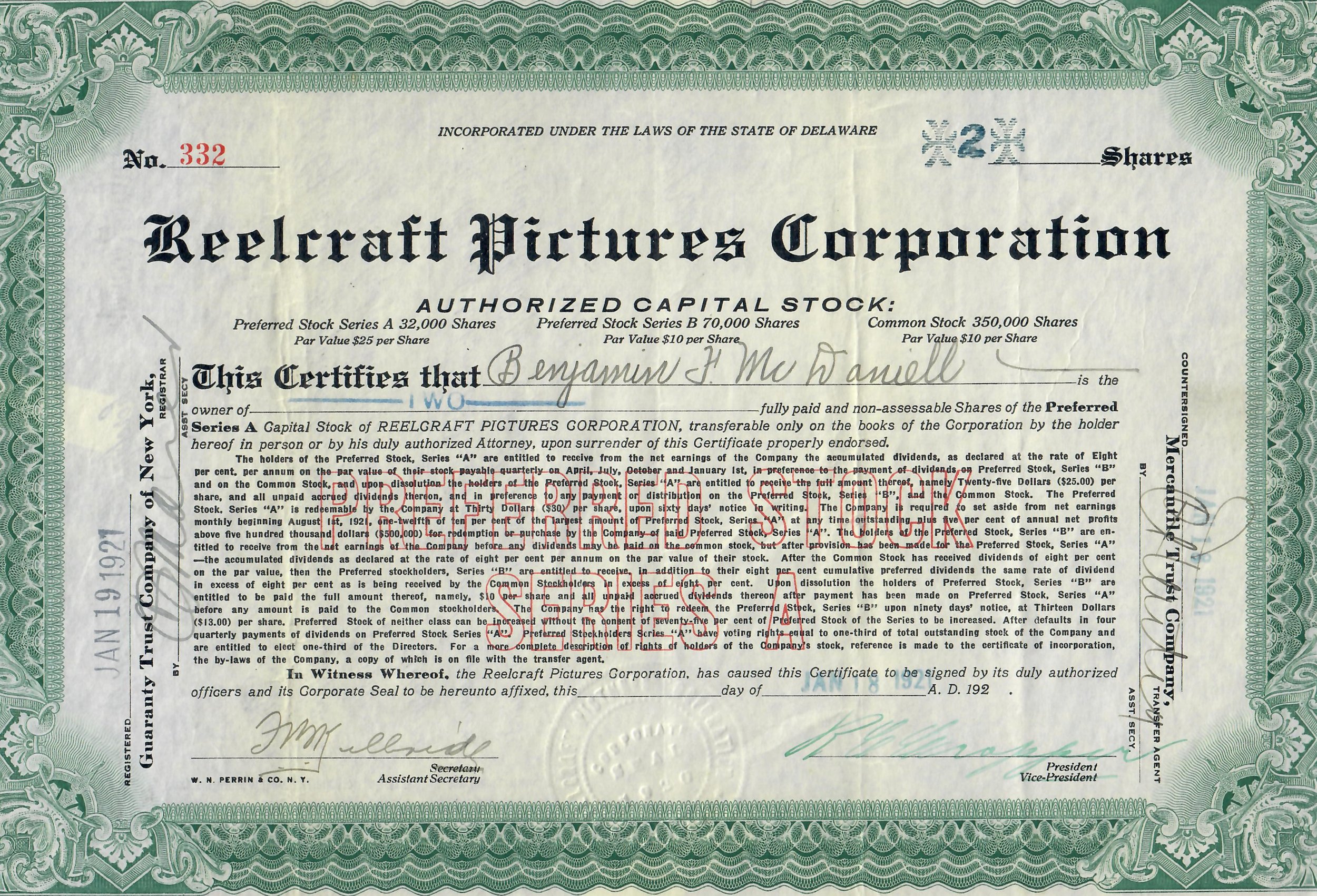
1921 stock certificate for Reelcraft Pictures Corporation
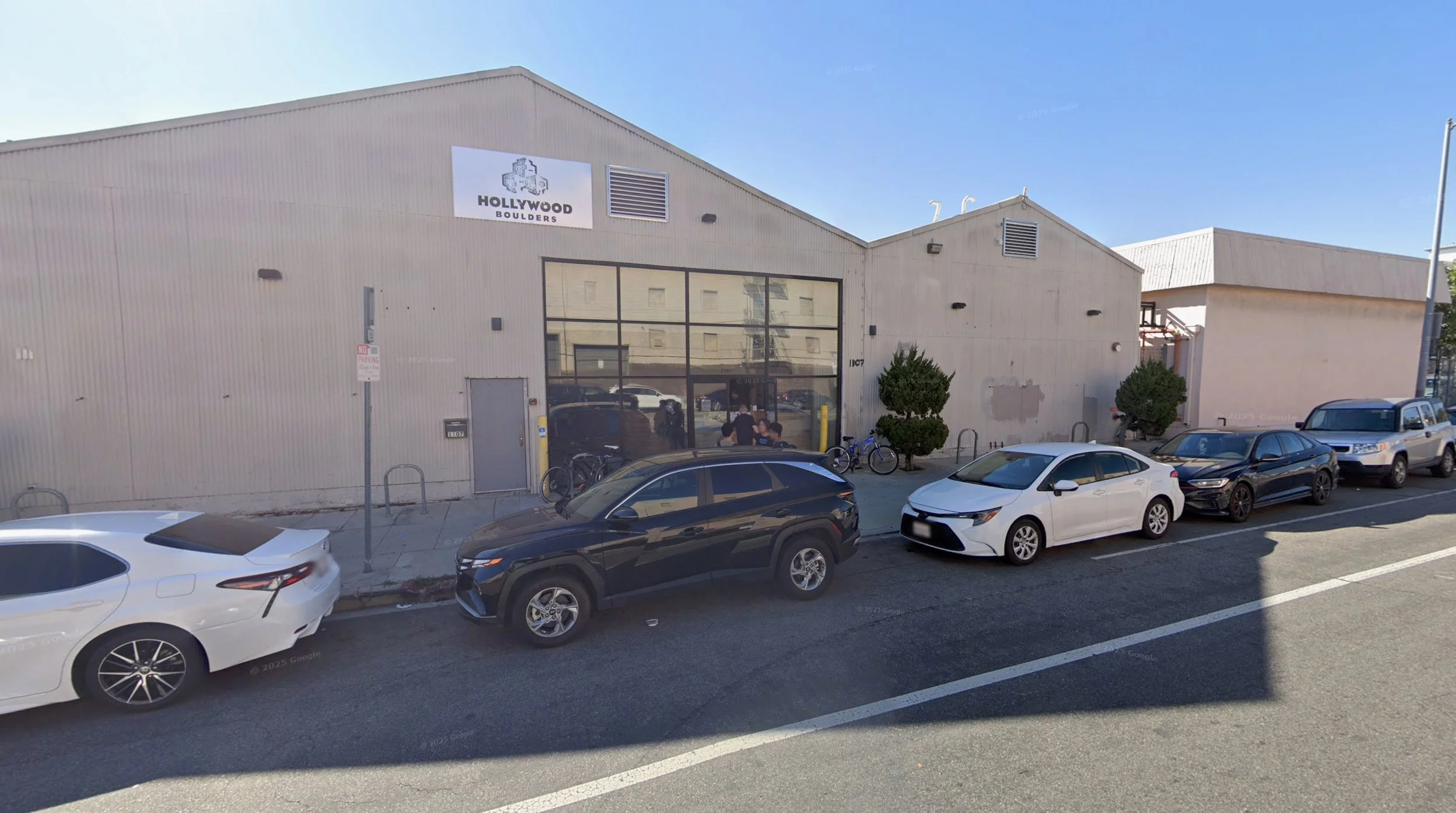
Distinctive studio-shaped buildings still stand today at the Hollywood address of Reelcraft Pictures.
1921
By the beginning of 1921, Billy B. Van is firmly established within Reelcraft’s Royal Comedy program. The company reports a library of eleven titles, at least five of which feature Van, indicating a steady output following the previous year’s initial releases.
Reelcraft itself continues to expand its operations, maintaining production facilities on both coasts, including a Hollywood studio on North Bronson Street in Los Angeles and eastern operations at the Mittenhall Studio in Yonkers, New York. The Yonkers studio is stated to be in production on three comedies starring Bud Duncan, Tweedy, and a film featuring an “all star” cast.
In August, however, Van appears outside the Reelcraft system in a notable casting announcement for “The Beauty Shop” a Cosmopolitan Productions feature starring Raymond Hitchcock. In the film, Van and his longtime stage partner James J. Corbett are cast as a pair of scheming “Bolognians,” marking a rare instance during this period in which Van is associated with a production not tied to Reelcraft. The supporting cast includes established screen players such as Raymond Hitchcock and Louise Fazenda, placing Van within a broader feature-film context.
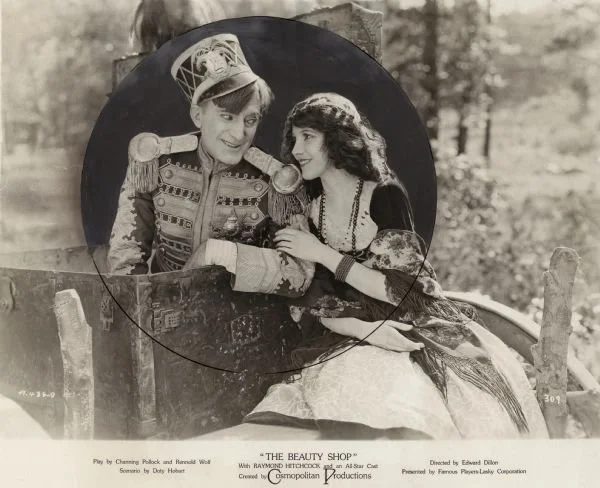
Raymond Hitchcock and Louise Fazenda in a publicity photo for “The Beauty Shop.”
By year’s end, Reelcraft further extends the reach of its productions through an agreement with the Pantages Circuit, a major theatrical network with extensive holdings across the western United States and Canada. The arrangement significantly broadens exhibition opportunities for the Royal Comedy series, including Van’s films.
Together, these developments suggest a year of consolidation and expansion: Van’s work is now part of a regular production pipeline, while occasional appearances beyond Reelcraft hint at a wider range of opportunities within the industry.
1922
1922 opens with renewed attention on “The Beauty Shop,” the Cosmopolitan Productions feature in which Billy B. Van had been cast the previous year. Released by Paramount in May, the film adapts a popular Broadway musical comedy, with Raymond Hitchcock reprising his stage role as Dr. Budd. Van appears as the undertaker Sobini, part of a scheme to lure the protagonist to the fictional land of “Bolognia” with the promise of an inheritance.
The film is met with largely unfavorable reviews. Critics point to the inherent difficulty of translating a musical comedy to the silent screen, with Film Daily remarking that such adaptations are “about as successful as a musical comedy would be minus the music,” and similar sentiments appearing in Exhibitors Trade Review. Despite its prominent cast, the production does not appear to have been a success.
At the same time, the distribution structure that had supported Van’s recent film work begins to collapse. In June, Reelcraft Pictures Corporation is forced into bankruptcy following an involuntary petition citing citing liabilities of $150,000-$160,000 and assets as low as $3,000.. A federal receiver is appointed to liquidate the company, and later in the year its library—comprising approximately 160 one- and two-reel subjects—is sold to the Export and Import Film Company.
Notably, surviving advertising for the sale highlights a number of Reelcraft performers but makes no mention of Van or the Royal Comedy series, leaving the status of his films within the catalog uncertain.
Following these developments, Van’s screen career appears to come to an end. No further film appearances have been identified, and he returns to touring in vaudeville, both in the United States and abroad, once again partnering with James J. Corbett.
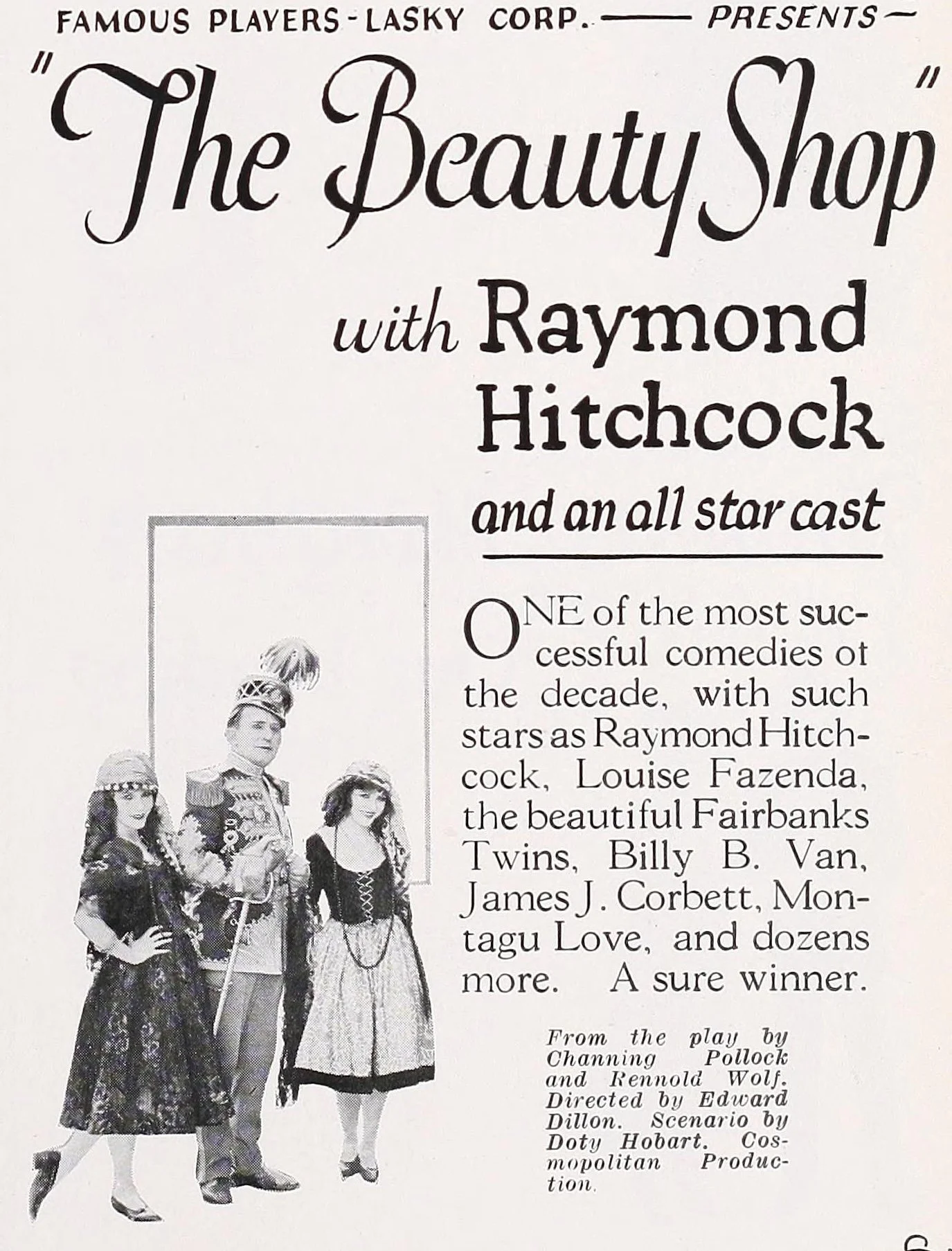
A Famous Players-Lasky Corp. ad announcing the release of “The Beauty Shop.”
1923
With Reelcraft in receivership and its Royal Comedy program effectively at an end, Billy B. Van returns to the stage, appearing in an extended Broadway run of “Adrienne.”
For unknown reasons, it’s reported that the long-time business relationship between Billy B. Van and his partner “Gentleman” Jim Corbett has ended and that they will each be “securing other partners.” Other than his marriage to Rose Beaumont (and their life together with her sister Nelle), no other relationship was as long nor important as the one with Corbett.
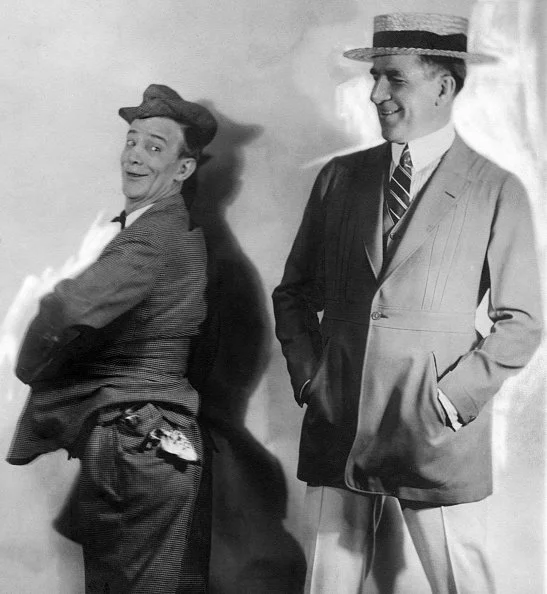
Publicity photo for the comedy duo Billy B. Van and “Gentleman” Jim Corbett- a professional relationship which spanned more than a decade on stage and screen.
1924
Despite his apparent absence from film production, Billy B. Van’s name surfaces in 1924 in an unexpected—and misleading—context. He is advertised as starring in the film “White Sin,” though the role in fact belongs to the phonetically similar actor Billy Bevan.
There would be a similar mixup with Billy Bevan in 1931, with Billy B. Van incorrectly listed as being in the cast of the Douglas Fairbanks Jr. feature “Chances.”
While misspellings and inconsistencies were common in the trade press of the period, this instance goes further, substituting one performer entirely for another. The error underscores the challenges inherent in reconstructing Van’s film career, where even contemporary sources can blur identities and complicate attribution.
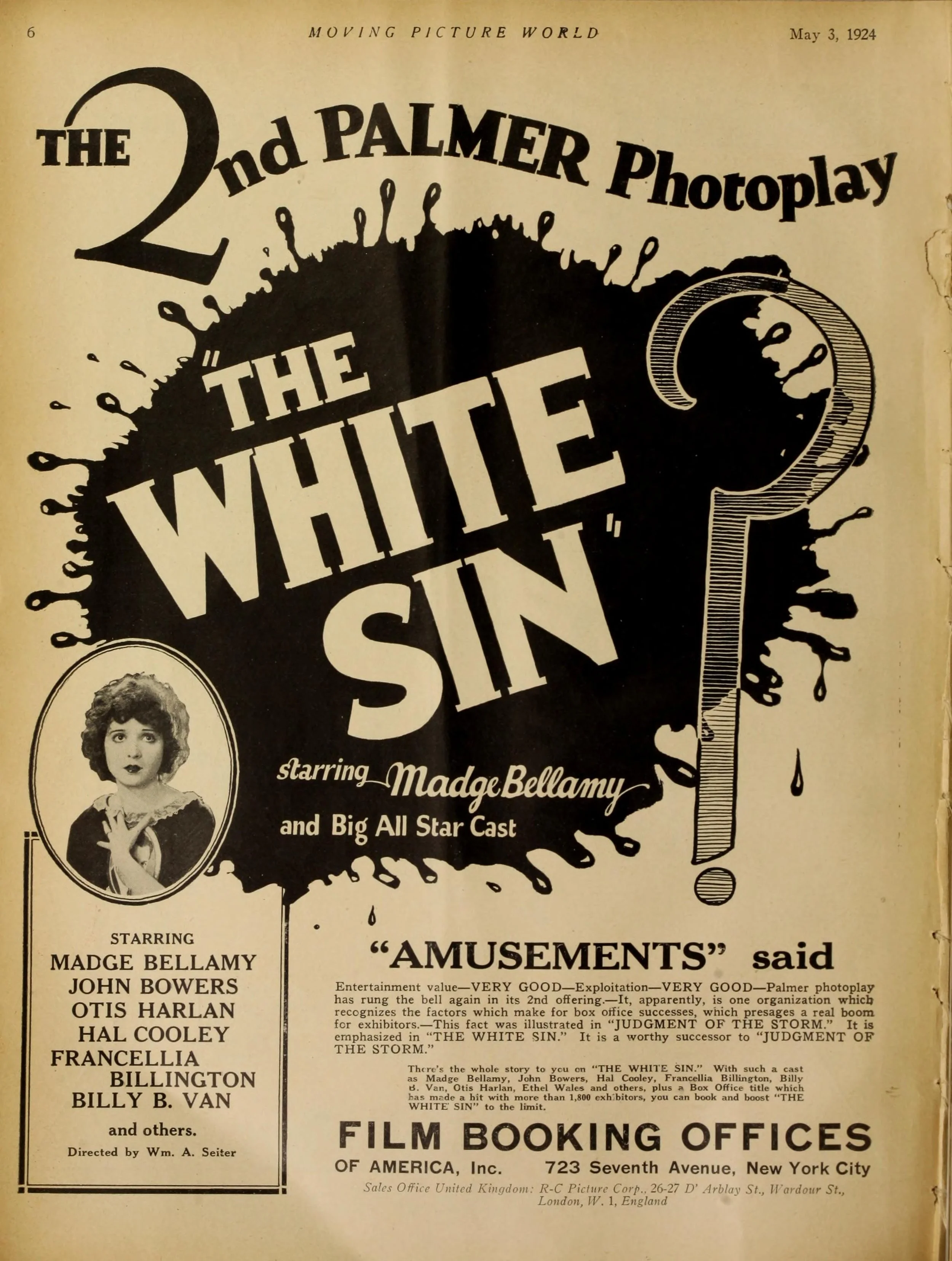
Advertisement for the movie “The White Sin” mistakenly lists Billy B. Van in the cast.
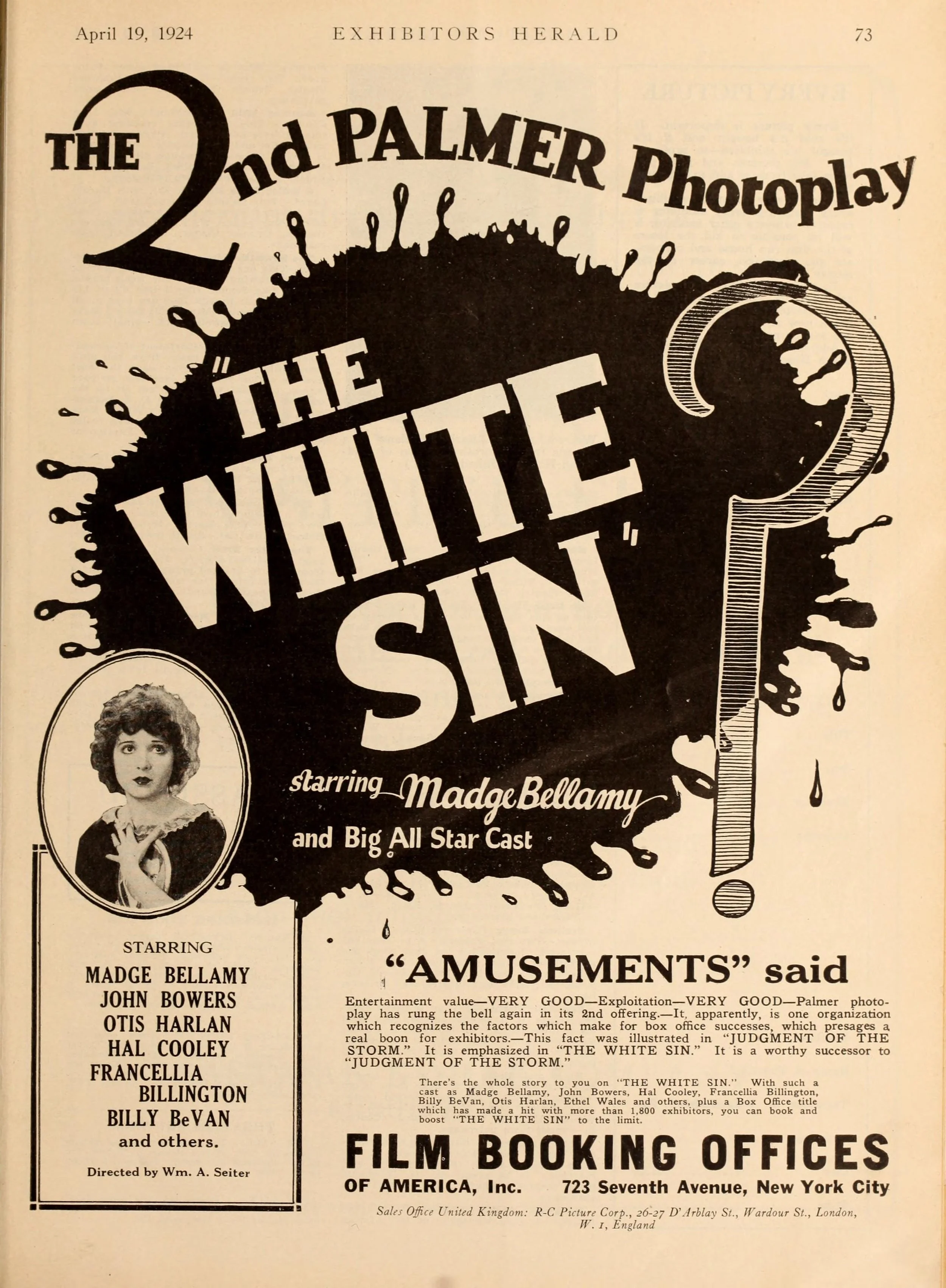
Advertisement for the movie “The White Sin” correctly lists the actor Billy BeVan.
1925
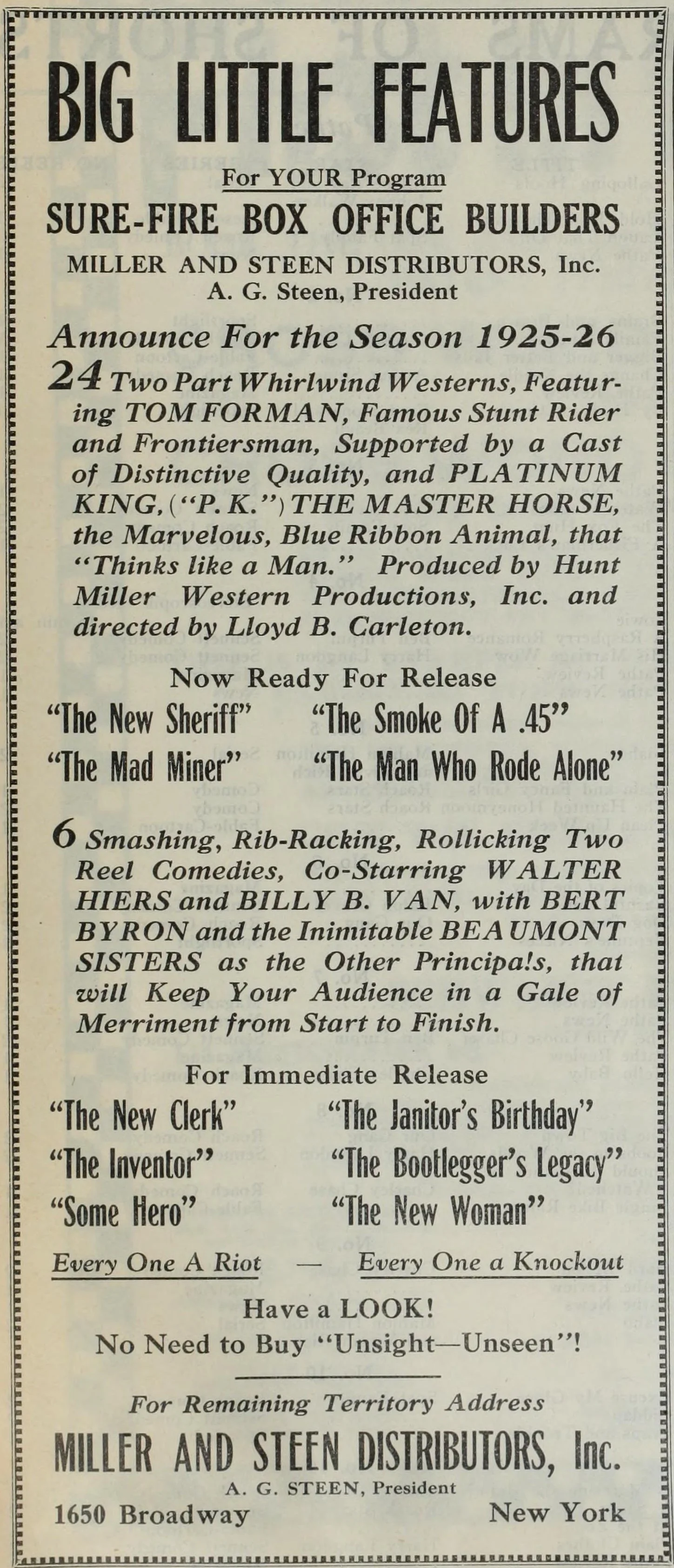
In 1925, Billy B. Van’s early film work unexpectedly resurfaces. Miller and Steen Film Distributors announce a series of six two-reel comedies featuring Van alongside Walter Hiers, Bert Byron, and the Beaumont Sisters, to be released for the 1925–26 season. The titles include “The New Clerk,” “The Janitor’s Birthday,” “The Inventor,” “Some Hero,” “The Bootlegger’s Legacy,” and “The New Woman.”
One of these, “The Janitor’s Birthday,” is particularly notable, having first been mentioned a decade earlier in connection with Van’s Equity Motion Picture activities in 1915. Its reappearance raises immediate questions about the origin and history of the series.
Miller and Steen’s president, A. G. Steen, asserts that the films were produced only a year and a half earlier and were originally intended for longer release before being re-edited into two-reel form. This account is soon challenged.
“I want to send out a denial, or something,”
Walter Hiers publicly disputes the claim, stating that the comedies were in fact made “about ten years ago” in Sunapee, New Hampshire, and minimizes his own involvement, describing himself as “just a punk small part player.”
A 1925 Miller & Steen advertisement lists 6 Billy B. Van films which had been made in 1915
The conflicting accounts leave the true provenance of the films uncertain, illustrating the difficulties of reconstructing early independent production histories—particularly when older material is repackaged and redistributed years later under new claims.
By this time, Van himself appears to have fully withdrawn from motion picture work. Settled in Newport, New Hampshire, he lives with his wife, Rose (Beaumont) Van, and her sister Nellie on an expansive estate described as “476 acres, embroidered with hills, trees, lakes, cottages and sky,” marking a striking contrast to the unsettled afterlife of his film career.
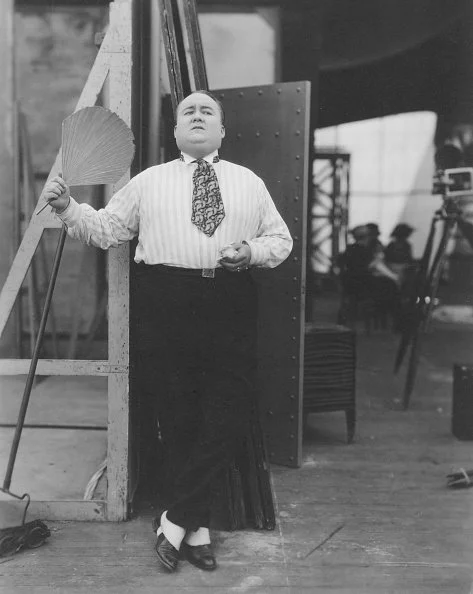
Silent-comedy star Walter Hiers appeared in many of Billy B. Van’s films, but tried to distance himself from them in later years.
1926
More of Billy B. Van’s early films find new life in 1926.
In 1926, several of Billy B. Van’s earlier films find new circulation through an emerging distribution channel: the Kodascope Library. Operated by Eastman Kodak, Kodascope offered 16mm movies for rental through a growing network of library locations across the United States and abroad- an early version of the home video rental businesses which dotted almost every neighborhood in the pre-streaming era.
Among the titles available were two of Van’s Reelcraft Royal Comedies, “The Plucky Hoodoo” and “Van-ar-chy,” indicating that his films continued to circulate even after the collapse of Reelcraft and the end of his screen career.
These Kodascope editions were produced as “reduction prints,” transferred from the original 35mm negatives to the smaller 16mm format and often shortened or even re-edited for home exhibition. While intended for non-theatrical use, such prints would later prove significant for preservation. The only known 1926 print of “Van-ar-chy,” for example, is from the Kodascope Library.
More broadly, the Kodascope system represents one of the earliest mechanisms by which silent-era films were duplicated and redistributed outside traditional theatrical channels. For Van’s work, it may also account for the survival—however fragmentary—of titles that might otherwise have been lost entirely.
Given the volume of prints created, and the network of libraries, the Kodascope Library continues to be an avenue being searched for additional/more complete prints of “The Plucky Hoodoo” and “Van-ar-chy.”
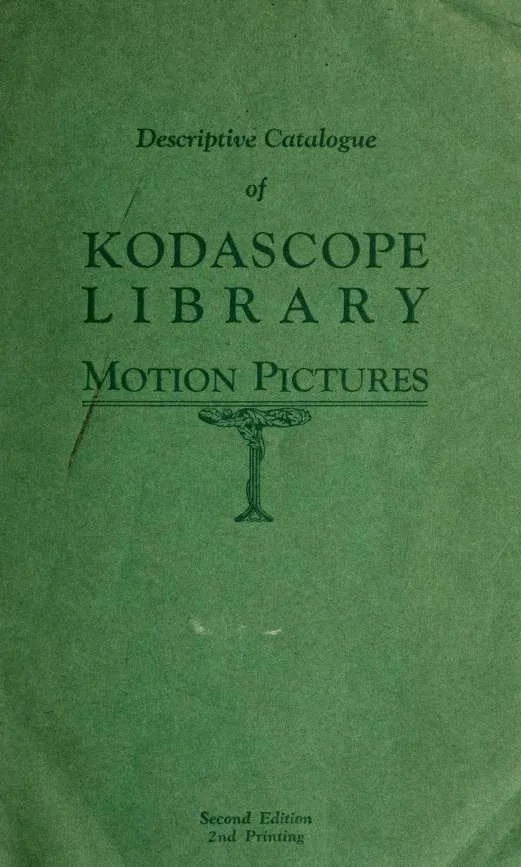
For many years, Kodak ran a library of films for home rental. Two of Van’s films turn up in this collection.
1929
In 1929, a brief retrospective glimpse of Billy B. Van’s screen career appears in the recollections of Cissie Fitzgerald, known as “the girl with the wink.” In a published reminiscence, Fitzgerald looks back on her time in motion pictures, including her work with Van.
Though fleeting, the reference serves as a reminder that Van’s film work—already several years in the past—remained part of the living memory of performers who had shared in the early years of screen comedy.
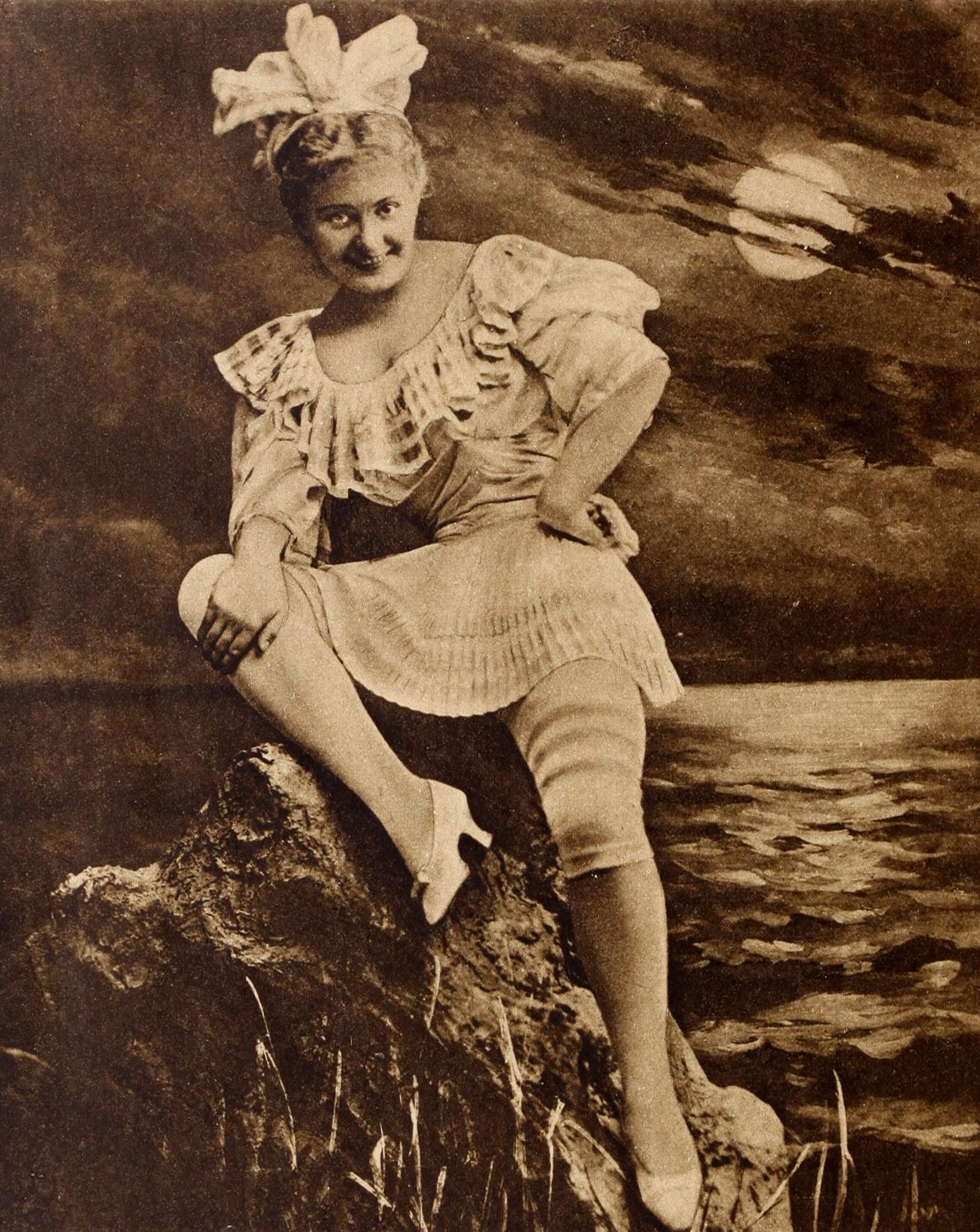
Publicity photo of actress Cissie Fitzgerald, who is said to have appeared in some of Van’s films.
1936
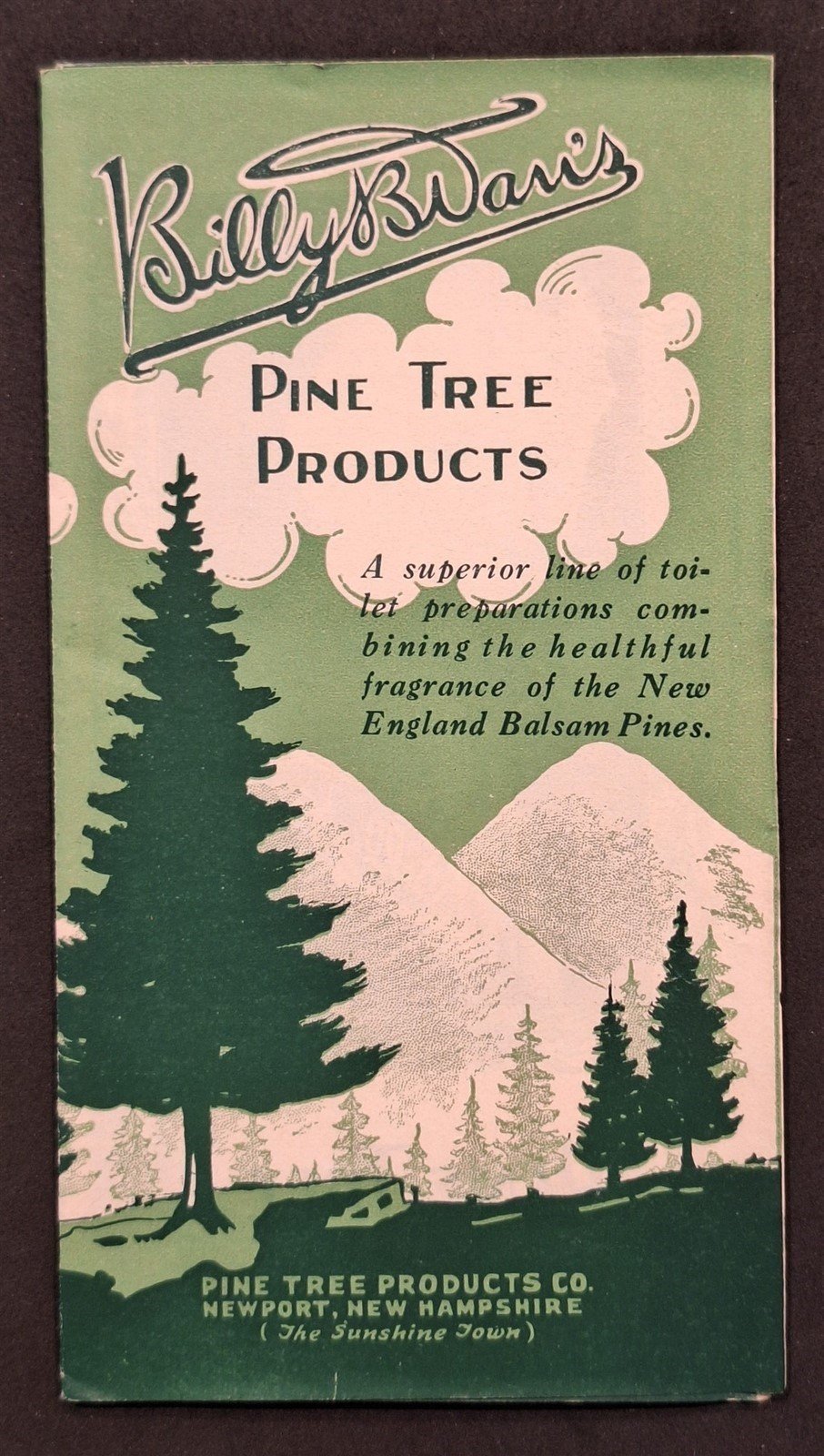
By 1936, Billy B. Van is long removed from motion pictures, but remains an active and evolving figure. In a Motion Picture Herald article, he reflects on his earlier career while outlining his current pursuits as a motivational speaker and head of a soap manufacturing business based in Newport, New Hampshire.
The piece also captures Van’s forward-looking imagination. Describing what he sees as the future of commerce, he envisions a system in which a customer’s written order is instantly transmitted to a central office, triggering rapid fulfillment and delivery:
“The customer will have an order blank and pen in his hand. The pen will be equipped with a photoelectric cell and, as he signs, the customer’s order will be automatically transmitted to the home office and the merchandise in turn will rocket forth and arrive probably before the salesman leaves.”
Nearly a century later, the concept reads as a striking anticipation of modern electronic ordering and rapid fulfillment systems, suggesting that Van’s creativity extended well beyond the stage and screen.
Promotional material for Billy B. Van’s Pine Tree Products, one of his many post-show business ventures.
1948
In 1948, Billy B. Van offers a late-life retrospective on his career, recalling his years on the stage and his involvement in early motion picture production at Lake Sunapee. The account is rich in detail, naming numerous collaborators and revisiting episodes from his film work, though it also introduces elements that are difficult to verify and, in some cases, appear to blend memory with anecdote.
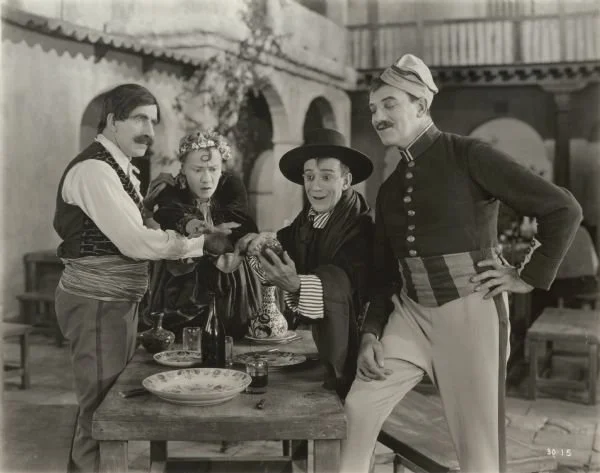
Among these are references to two additional film titles: “The Zulu Nightmare” and “The Lucky Hobo.” The latter may correspond to known variations such as “The Lucky Hoodoo” or “The Plucky Hoodoo,” given the fluidity with which titles were often recorded and reused in both stage and screen. “The Zulu Nightmare”remains more obscure, though a still photograph has been identified that is purportedly connected to the production.
The article also advances a claim that has been widely repeated in subsequent accounts: that the Equity Motion Picture Company, founded by Van in 1915, “later amalgamated with MGM.” While Metro-Goldwyn-Mayer—formed in 1924—did acquire and consolidate numerous production entities, no independent evidence has been found to support a direct connection between MGM and Equity. As such, the statement remains uncorroborated and illustrative of the challenges inherent in relying on retrospective accounts, even those provided by participants themselves.